
Matthew Sturgis read history at Oxford, worked for four years in publishing, and since then has made his living by writing - art criticism for 'Harpers Queens', travel pieces for the 'Sunday Telegraph', and book reviews for the 'Independent'. His cartoons have been published in the 'Oldie' and the 'Daily Mail'. His previous book, 'Passionate Attitudes: The English Decadence of the 1890s', was published in 1995 by Macmillan.
Walter Sickert. A Life (Text Only)
Par :Formats :
Disponible dans votre compte client Decitre ou Furet du Nord dès validation de votre commande. Le format ePub protégé est :
- Compatible avec une lecture sur My Vivlio (smartphone, tablette, ordinateur)
- Compatible avec une lecture sur liseuses Vivlio
- Pour les liseuses autres que Vivlio, vous devez utiliser le logiciel Adobe Digital Edition. Non compatible avec la lecture sur les liseuses Kindle, Remarkable et Sony
- Non compatible avec un achat hors France métropolitaine
 , qui est-ce ?
Notre partenaire de plateforme de lecture numérique où vous retrouverez l'ensemble de vos ebooks gratuitement
Pour en savoir plus sur nos ebooks, consultez notre aide en ligne ici
C'est si simple ! Lisez votre ebook avec l'app Vivlio sur votre tablette, mobile ou ordinateur :

- Nombre de pages784
- FormatePub
- ISBN978-0-00-737434-2
- EAN9780007374342
- Date de parution06/02/2014
- Protection num.Adobe DRM
- Infos supplémentairesepub
- ÉditeurHarper Perennial
Résumé
This edition does not include illustrations.
The first major life of the outstanding British painter - and Jack the Ripper suspect - Walter Sickert (1860-1942), by the highly acclaimed biographer of Aubrey Beardsley.
Walter Richard Sickert is perhaps the outstanding figure of British art during the last hundred years. Many contemporary painters, from Hodgkin and Bacon to Auerbach and Kossof, acknowledge a debt to his influence.
His career spanned six decades of unceasing experiment and achievement. As a young artist, he was welcomed and encouraged by Degas. He was the disciple of Whistler and mentor of Beardsley. He founded the London Impressionists and the Camden Town Group. He was taken up by both the Woolfs and the Sitwells. He gave painting lessons to Winston Churchill. His energy was prodigious and his personality fascinating: he was also an illustrator, cartoonist, writer, polemicist, teacher and wit.
He relished controversy: his early paintings of London music halls and his late works, based on 18th-century etchings and contemporary news photographs, provoked outraged criticism from conventional commentators. Sturgis also devotes an appendix to charting in detail Sickert's posthumous life as a player in the 'Jack the Ripper' circus, assessing (and demolishing) the arguments of Patricia Cornwell and others in the light of his own discoveries.
His career spanned six decades of unceasing experiment and achievement. As a young artist, he was welcomed and encouraged by Degas. He was the disciple of Whistler and mentor of Beardsley. He founded the London Impressionists and the Camden Town Group. He was taken up by both the Woolfs and the Sitwells. He gave painting lessons to Winston Churchill. His energy was prodigious and his personality fascinating: he was also an illustrator, cartoonist, writer, polemicist, teacher and wit.
He relished controversy: his early paintings of London music halls and his late works, based on 18th-century etchings and contemporary news photographs, provoked outraged criticism from conventional commentators. Sturgis also devotes an appendix to charting in detail Sickert's posthumous life as a player in the 'Jack the Ripper' circus, assessing (and demolishing) the arguments of Patricia Cornwell and others in the light of his own discoveries.
A propos de Matthew Sturgis
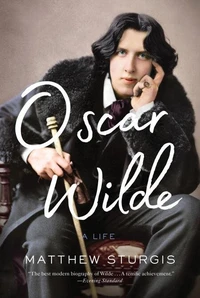
Oscar Wilde. A Life
E-book
12,61 €
3,99 €
1,49 €
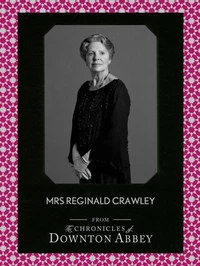
Mrs Reginald Crawley
E-book
0,99 €
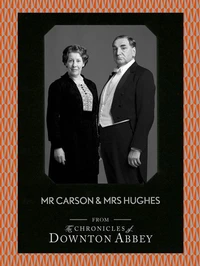
Mr Carson and Mrs Hughes
E-book
0,99 €
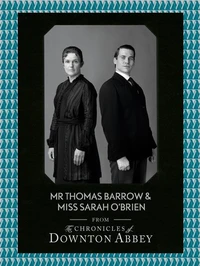
0,99 €
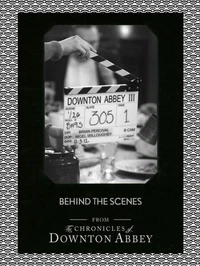
Behind the Scenes
E-book
0,99 €