SOLDES
Jusqu'à -70% sur une sélection d'articles*

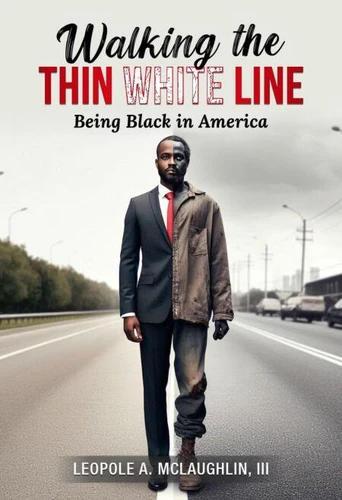
Walking the Thin White Line: Being Black in America
Par :Formats :
Disponible dans votre compte client Decitre ou Furet du Nord dès validation de votre commande. Le format ePub est :
- Compatible avec une lecture sur My Vivlio (smartphone, tablette, ordinateur)
- Compatible avec une lecture sur liseuses Vivlio
- Pour les liseuses autres que Vivlio, vous devez utiliser le logiciel Adobe Digital Edition. Non compatible avec la lecture sur les liseuses Kindle, Remarkable et Sony
 , qui est-ce ?
Notre partenaire de plateforme de lecture numérique où vous retrouverez l'ensemble de vos ebooks gratuitement
Pour en savoir plus sur nos ebooks, consultez notre aide en ligne ici
C'est si simple ! Lisez votre ebook avec l'app Vivlio sur votre tablette, mobile ou ordinateur :

- FormatePub
- ISBN8227482419
- EAN9798227482419
- Date de parution18/09/2024
- Protection num.pas de protection
- Infos supplémentairesepub
- ÉditeurBig Dog Books, LLC
Résumé
Walking the Thin White Line: Being Black in America is a profound exploration of the complex and often precarious experience of Black Americans navigating a society structured by systemic racism. This book delves into the historical, social, and cultural forces that have shaped Black identity, examining how these forces continue to influence the lives of Black people today. The thin white line serves as a powerful metaphor for the delicate balance Black Americans must maintain in a world that frequently marginalizes and devalues them.
The book traces the origins of this metaphor back to the earliest days of American history, where the founding principles of liberty and justice were starkly contradicted by the brutal reality of slavery. It examines how this contradiction laid the groundwork for a racial hierarchy that has persisted for centuries, becoming deeply embedded in American life. Through a detailed examination of key historical events, including slavery, the Jim Crow era, the Civil Rights Movement, and the post-Civil Rights era, the book reveals how systemic racism has been perpetuated across generations.
It also highlights the enduring impact of these injustices on Black identity, economic opportunity, and social mobility. The book also tackles contemporary issues such as police brutality, the criminal justice system, and economic inequality. It explores how these challenges continue to affect Black communities, using case studies, personal stories, and statistical data to illustrate the ongoing struggle for racial justice.
In addition to analyzing the challenges, Walking the Thin White Line celebrates the resilience and cultural strength of the Black community. It explores the power of Black culture, the importance of the Black family, and the role of religion and spirituality in providing hope and resilience in the face of adversity. The book concludes with a forward-looking vision for a more just and equitable society.
It discusses the ongoing fight for social justice, the role of youth activism and social media, and practical steps toward dismantling systemic racism. The final chapter offers reflections on what a truly equitable society would look like and provides a roadmap for achieving progress. Walking the Thin White Line: Being Black in America is both a historical analysis and a call to action. It provides a comprehensive understanding of the challenges faced by Black Americans, while also offering hope and practical solutions for building a more just and equitable future.
This book is essential reading for anyone seeking to understand the complexities of race in America and the ongoing fight for racial justice.
The book traces the origins of this metaphor back to the earliest days of American history, where the founding principles of liberty and justice were starkly contradicted by the brutal reality of slavery. It examines how this contradiction laid the groundwork for a racial hierarchy that has persisted for centuries, becoming deeply embedded in American life. Through a detailed examination of key historical events, including slavery, the Jim Crow era, the Civil Rights Movement, and the post-Civil Rights era, the book reveals how systemic racism has been perpetuated across generations.
It also highlights the enduring impact of these injustices on Black identity, economic opportunity, and social mobility. The book also tackles contemporary issues such as police brutality, the criminal justice system, and economic inequality. It explores how these challenges continue to affect Black communities, using case studies, personal stories, and statistical data to illustrate the ongoing struggle for racial justice.
In addition to analyzing the challenges, Walking the Thin White Line celebrates the resilience and cultural strength of the Black community. It explores the power of Black culture, the importance of the Black family, and the role of religion and spirituality in providing hope and resilience in the face of adversity. The book concludes with a forward-looking vision for a more just and equitable society.
It discusses the ongoing fight for social justice, the role of youth activism and social media, and practical steps toward dismantling systemic racism. The final chapter offers reflections on what a truly equitable society would look like and provides a roadmap for achieving progress. Walking the Thin White Line: Being Black in America is both a historical analysis and a call to action. It provides a comprehensive understanding of the challenges faced by Black Americans, while also offering hope and practical solutions for building a more just and equitable future.
This book is essential reading for anyone seeking to understand the complexities of race in America and the ongoing fight for racial justice.