SOLDES
Jusqu'à -70% sur une sélection d'articles*

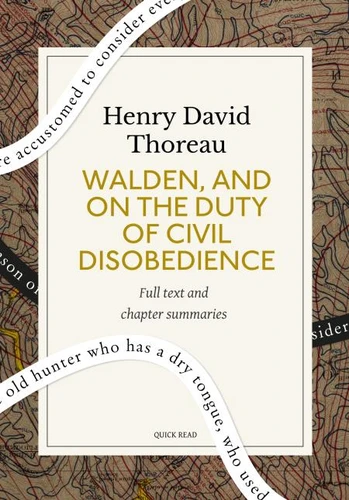
Walden, and On The Duty Of Civil Disobedience: A Quick Read edition
Par : ,Formats :
Disponible dans votre compte client Decitre ou Furet du Nord dès validation de votre commande. Le format Multi-format est :
- Pour les liseuses autres que Vivlio, vous devez utiliser le logiciel Adobe Digital Edition. Non compatible avec la lecture sur les liseuses Kindle, Remarkable et Sony
 , qui est-ce ?
Notre partenaire de plateforme de lecture numérique où vous retrouverez l'ensemble de vos ebooks gratuitement
Pour en savoir plus sur nos ebooks, consultez notre aide en ligne ici
C'est si simple ! Lisez votre ebook avec l'app Vivlio sur votre tablette, mobile ou ordinateur :

- FormatMulti-format
- ISBN978-2-38582-127-2
- EAN9782385821272
- Date de parution16/02/2024
- Protection num.pas de protection
- Infos supplémentairesMulti-Format
- ÉditeurQuick Read
Résumé
Discover a new way to read classics with Quick Read. This Quick Read edition includes both the full text and a summary for each chapter. - Reading time of the complete text: about 10 hours - Reading time of the summarized text: 13 minutes "Civil Disobedience" is an essay by Henry David Thoreau, published in 1849. Thoreau argues that individuals should not allow governments to overrule their consciences and that they have a duty to avoid allowing such acquiescence to enable the government to make them the agents of injustice.
Thoreau was motivated in part by his repulsion of slavery and the Mexican-American War. He argues that governments are typically more harmful than helpful and that democracy is no cure for this. Thoreau contends that if the law is itself clearly unjust, and the lawmaking process is not designed to quickly obliterate such unjust laws, then the law deserves no respect and it should be broken. Thoreau's essay has influenced many, including Mahatma Gandhi and Martin Luther King Jr.
Thoreau was motivated in part by his repulsion of slavery and the Mexican-American War. He argues that governments are typically more harmful than helpful and that democracy is no cure for this. Thoreau contends that if the law is itself clearly unjust, and the lawmaking process is not designed to quickly obliterate such unjust laws, then the law deserves no respect and it should be broken. Thoreau's essay has influenced many, including Mahatma Gandhi and Martin Luther King Jr.
A propos de Quick Read


4,99 €

4,99 €

4,99 €

4,99 €
4,99 €

4,99 €

4,99 €

4,99 €

4,99 €

4,99 €


4,99 €


4,99 €


4,99 €

4,99 €

4,99 €