SOLDES
Jusqu'à -70% sur une sélection d'articles*

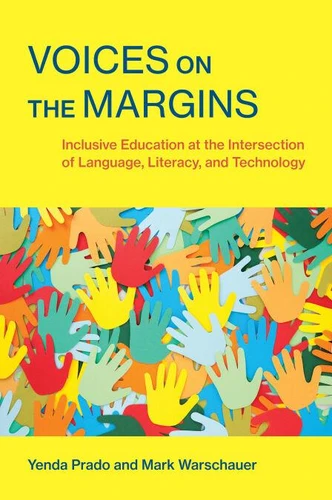
Voices on the Margins. Inclusive Education at the Intersection of Language, Literacy, and Technology
Par : ,Formats :
Disponible dans votre compte client Decitre ou Furet du Nord dès validation de votre commande. Le format ePub protégé est :
- Compatible avec une lecture sur My Vivlio (smartphone, tablette, ordinateur)
- Compatible avec une lecture sur liseuses Vivlio
- Pour les liseuses autres que Vivlio, vous devez utiliser le logiciel Adobe Digital Edition. Non compatible avec la lecture sur les liseuses Kindle, Remarkable et Sony
- Non compatible avec un achat hors France métropolitaine
 , qui est-ce ?
Notre partenaire de plateforme de lecture numérique où vous retrouverez l'ensemble de vos ebooks gratuitement
Pour en savoir plus sur nos ebooks, consultez notre aide en ligne ici
C'est si simple ! Lisez votre ebook avec l'app Vivlio sur votre tablette, mobile ou ordinateur :

- Nombre de pages318
- FormatePub
- ISBN978-0-262-37859-8
- EAN9780262378598
- Date de parution14/05/2024
- Protection num.Adobe DRM
- Taille4 Mo
- Infos supplémentairesepub
- ÉditeurThe MIT Press
Résumé
A rich view of inclusive education at the intersection of language, literacy, and technology-drawing on case study research in a diverse full-inclusion US school before, during, and after the COVID-19 pandemic. Despite advancing efforts at integration, the segregation of students with disabilities from their nondisabled peers persists. In the United States, 34 percent of all students with disabilities spend at least 20 percent of their instructional time in segregated classrooms.
For students with intellectual or multiple disabilities, segregated placement soars to 80 percent. In Voices on the Margins, Yenda Prado and Mark Warschauer provide an ethnography of an extraordinary full-inclusion public charter school in the western United States-Future Visions Academy. And they ask: What does it mean to be inclusive in today's schools with their increasingly pervasive use of digital technologies?Voices on the Margins examines the ways digital technologies support inclusion and language and literacy practices for culturally and linguistically diverse children with and without disabilities.
A wide range of qualitative data collected in the case study illuminates three central themes: (1) the kinds of social organization that allow a fully inclusive environment for children with disabilities to thrive, (2) the ways that digital technologies can be used to help students express their voice and agency, while developing language and literacy skills, and (3) the ways that digital technologies can be used to foster stronger networks and connections between students, teachers, staff, and parents.
For students with intellectual or multiple disabilities, segregated placement soars to 80 percent. In Voices on the Margins, Yenda Prado and Mark Warschauer provide an ethnography of an extraordinary full-inclusion public charter school in the western United States-Future Visions Academy. And they ask: What does it mean to be inclusive in today's schools with their increasingly pervasive use of digital technologies?Voices on the Margins examines the ways digital technologies support inclusion and language and literacy practices for culturally and linguistically diverse children with and without disabilities.
A wide range of qualitative data collected in the case study illuminates three central themes: (1) the kinds of social organization that allow a fully inclusive environment for children with disabilities to thrive, (2) the ways that digital technologies can be used to help students express their voice and agency, while developing language and literacy skills, and (3) the ways that digital technologies can be used to foster stronger networks and connections between students, teachers, staff, and parents.