SOLDES
Jusqu'à -70% sur une sélection d'articles*

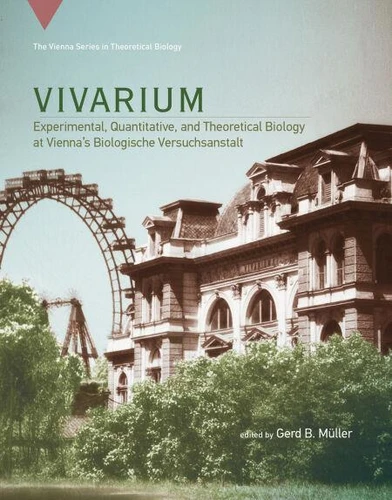
Vivarium. Experimental, Quantitative, and Theoretical Biology at Vienna's Biologische Versuchsanstalt
Par :Formats :
Disponible dans votre compte client Decitre ou Furet du Nord dès validation de votre commande. Le format ePub protégé est :
- Compatible avec une lecture sur My Vivlio (smartphone, tablette, ordinateur)
- Compatible avec une lecture sur liseuses Vivlio
- Pour les liseuses autres que Vivlio, vous devez utiliser le logiciel Adobe Digital Edition. Non compatible avec la lecture sur les liseuses Kindle, Remarkable et Sony
- Non compatible avec un achat hors France métropolitaine
 , qui est-ce ?
Notre partenaire de plateforme de lecture numérique où vous retrouverez l'ensemble de vos ebooks gratuitement
Pour en savoir plus sur nos ebooks, consultez notre aide en ligne ici
C'est si simple ! Lisez votre ebook avec l'app Vivlio sur votre tablette, mobile ou ordinateur :

- Nombre de pages304
- FormatePub
- ISBN978-0-262-34205-6
- EAN9780262342056
- Date de parution13/10/2017
- Protection num.Adobe DRM
- Taille4 Mo
- Infos supplémentairesepub
- ÉditeurThe MIT Press
Résumé
The scientific achievements and forgotten legacy of a major Austrian research institute, from its founding in 1902 to its wartime destruction in 1945. The Biologische Versuchsanstalt was founded in Vienna in 1902 with the explicit goal to foster the quantification, mathematization, and theory formation of the biological sciences. Three biologists from affluent Viennese Jewish families-Hans Przibram, Wilhelm Figdor, and Leopold von Portheim-founded, financed, and nurtured the institute, overseeing its development into one of the most advanced biological research institutes of the time.
And yet today its accomplishments are nearly forgotten. In 1938, the founders and other members were denied access to the institute by the Nazis and were forced into exile or deported to concentration camps. The building itself was destroyed by fire in April 1945. This book rescues the legacy of the "Vivarium" (as the Institute was often called), describing both its scientific achievements and its place in history.
The book covers the Viennese sociocultural context at the time of the Vivarium's founding, and the scientific zeitgeist that shaped its investigations. It discusses the institute's departments and their research topics, and describes two examples that had scientific and international ramifications: the early work of Karl von Frisch, who in 1973 won the Nobel Prize in Physiology or Medicine; and the connection to Cold Spring Harbor Laboratory in New York.
ContributorsHeiner Fangerau, Johannes Feichtinger, Georg Gaugusch, Manfred D. Laubichler, Cheryl A. Logan, Gerd B. Müller, Tania Munz, Kärin Nickelsen, Christian Reiß, Kate E. Sohasky, Heiko Stoff, Klaus Taschwer
And yet today its accomplishments are nearly forgotten. In 1938, the founders and other members were denied access to the institute by the Nazis and were forced into exile or deported to concentration camps. The building itself was destroyed by fire in April 1945. This book rescues the legacy of the "Vivarium" (as the Institute was often called), describing both its scientific achievements and its place in history.
The book covers the Viennese sociocultural context at the time of the Vivarium's founding, and the scientific zeitgeist that shaped its investigations. It discusses the institute's departments and their research topics, and describes two examples that had scientific and international ramifications: the early work of Karl von Frisch, who in 1973 won the Nobel Prize in Physiology or Medicine; and the connection to Cold Spring Harbor Laboratory in New York.
ContributorsHeiner Fangerau, Johannes Feichtinger, Georg Gaugusch, Manfred D. Laubichler, Cheryl A. Logan, Gerd B. Müller, Tania Munz, Kärin Nickelsen, Christian Reiß, Kate E. Sohasky, Heiko Stoff, Klaus Taschwer