
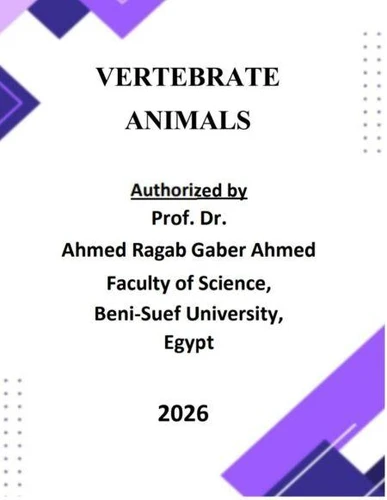
Faculty of science, Beni-Suef University, Egypt
Vertebrate animals
Par :Formats :
Disponible dans votre compte client Decitre ou Furet du Nord dès validation de votre commande. Le format ePub est :
- Compatible avec une lecture sur My Vivlio (smartphone, tablette, ordinateur)
- Compatible avec une lecture sur liseuses Vivlio
- Pour les liseuses autres que Vivlio, vous devez utiliser le logiciel Adobe Digital Edition. Non compatible avec la lecture sur les liseuses Kindle, Remarkable et Sony
 , qui est-ce ?
Notre partenaire de plateforme de lecture numérique où vous retrouverez l'ensemble de vos ebooks gratuitement
Pour en savoir plus sur nos ebooks, consultez notre aide en ligne ici
C'est si simple ! Lisez votre ebook avec l'app Vivlio sur votre tablette, mobile ou ordinateur :

- FormatePub
- ISBN8233366826
- EAN9798233366826
- Date de parution04/03/2026
- Protection num.pas de protection
- Infos supplémentairesepub
- ÉditeurLinda Balsamo
Résumé
This book consists of nine chapters. The main concern of this book is to show the following: Classification of Phylum Chordata, general characters of Hemichordata (Blanoglossa), Urochordata (Ascidia; the digestive, circulatory, genital and nervous systems, and development), and Cephalochordata (Amphioxus, the digestive, skeleton, circulatory, excretory, nervous, and genital systems). Also, this book displays the general characters of vertebrata: Agnathostomata (Cyclostomata; Petromyzon) and Agnathostomata (Ostracoderm), and Gnathostomata.
The general characters of chondrichthyes (dogfish), osteichthyes (tilapia), amphibia (Frog), reptilia (Lizard), aves (Pigeon; types of feathers, the digestive system, and urogenital systems), and mammals (Rabbit; the digestive, respiratory, urinary, and reproductive systems) will be addressed. Finally, this book shows the causes of diversity in vertebrates.
The general characters of chondrichthyes (dogfish), osteichthyes (tilapia), amphibia (Frog), reptilia (Lizard), aves (Pigeon; types of feathers, the digestive system, and urogenital systems), and mammals (Rabbit; the digestive, respiratory, urinary, and reproductive systems) will be addressed. Finally, this book shows the causes of diversity in vertebrates.
A propos de Ahmed Ahmed

Embryos Of Vertebrates
E-book
33,49 €

32,99 €

33,99 €
30,49 €

الحمل والأمراض الجنينية
E-book
34,49 €

أجنة الفقاريات
E-book
33,49 €

الحيوانات الفقارية
E-book
31,99 €

32,99 €

21,99 €