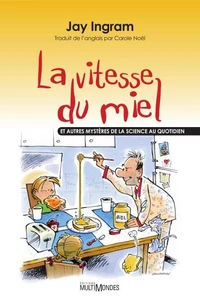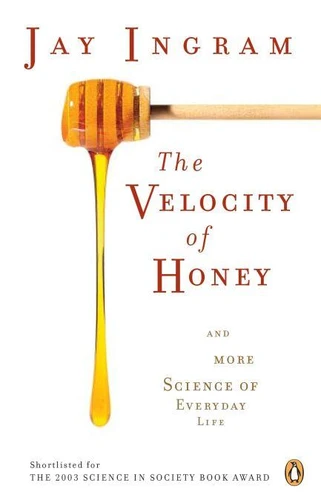
Velocity of Honey. And More Science Of Everyday Life
Par :Formats :
Disponible dans votre compte client Decitre ou Furet du Nord dès validation de votre commande. Le format ePub protégé est :
- Compatible avec une lecture sur My Vivlio (smartphone, tablette, ordinateur)
- Compatible avec une lecture sur liseuses Vivlio
- Pour les liseuses autres que Vivlio, vous devez utiliser le logiciel Adobe Digital Edition. Non compatible avec la lecture sur les liseuses Kindle, Remarkable et Sony
- Non compatible avec un achat hors France métropolitaine
 , qui est-ce ?
Notre partenaire de plateforme de lecture numérique où vous retrouverez l'ensemble de vos ebooks gratuitement
Pour en savoir plus sur nos ebooks, consultez notre aide en ligne ici
C'est si simple ! Lisez votre ebook avec l'app Vivlio sur votre tablette, mobile ou ordinateur :

- Nombre de pages224
- FormatePub
- ISBN0-14-318135-1
- EAN9780143181354
- Date de parution05/10/2004
- Protection num.Adobe DRM
- Taille295 Ko
- Infos supplémentairesepub
- ÉditeurPenguin Canada
Résumé
Why doesn't honey flow out in all directions across your toast? What's the science behind the theory of 'six degrees of separation'? How do stones 'skip'? When visiting a new place, why does getting there always seem to take so much longer than returning home? In The Velocity of Honey, bestselling author Jay Ingram muses upon these and many more daily mysteries that puzzle and perplex. From mosquitoes to the Marvel Universe, baseball to baby-holding, Ingram's topics are diverse.
He also makes startling connections. In some pieces, he relates anecdotes from the history of science and demonstrates their relevance to contemporary scientific debates. In others, he explores the science behind many of our proverbial expressions, common sayings such as 'time flies when you're having fun' and 'it's a small world after all.' In still others, he highlights intriguing links between the worlds of art and science.
As in his hugely popular The Science of Everyday Life, Ingram makes the science of our lives accessible and fascinating.
He also makes startling connections. In some pieces, he relates anecdotes from the history of science and demonstrates their relevance to contemporary scientific debates. In others, he explores the science behind many of our proverbial expressions, common sayings such as 'time flies when you're having fun' and 'it's a small world after all.' In still others, he highlights intriguing links between the worlds of art and science.
As in his hugely popular The Science of Everyday Life, Ingram makes the science of our lives accessible and fascinating.