
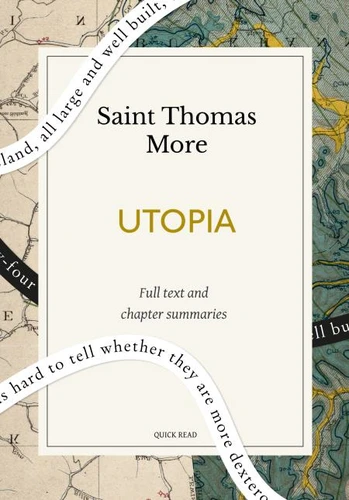
Utopia: A Quick Read edition
Par : ,Formats :
Disponible dans votre compte client Decitre ou Furet du Nord dès validation de votre commande. Le format Multi-format est :
- Pour les liseuses autres que Vivlio, vous devez utiliser le logiciel Adobe Digital Edition. Non compatible avec la lecture sur les liseuses Kindle, Remarkable et Sony
 , qui est-ce ?
Notre partenaire de plateforme de lecture numérique où vous retrouverez l'ensemble de vos ebooks gratuitement
Pour en savoir plus sur nos ebooks, consultez notre aide en ligne ici
C'est si simple ! Lisez votre ebook avec l'app Vivlio sur votre tablette, mobile ou ordinateur :

- FormatMulti-format
- ISBN978-2-38582-142-5
- EAN9782385821425
- Date de parution16/02/2024
- Protection num.pas de protection
- Infos supplémentairesMulti-Format
- ÉditeurQuick Read
Résumé
Discover a new way to read classics with Quick Read.
This Quick Read edition includes both the full text and a summary for each chapter.
- Reading time of the complete text: about 4 hours
- Reading time of the summarized text: 9 minutes
"Utopia" is a work of fiction and socio-political satire by Thomas More, written in Latin and published in 1516. The book is divided into two parts: "Book one: Dialogue of Council, " and "Book two: Discourse on Utopia." The first book tells of the traveller Raphael Hythlodaeus, to whom More is introduced in Antwerp, and it also explores the subject of how best to counsel a prince, a popular topic at the time.
The second book has Hythloday tell his interlocutors about Utopia, where he has lived for five years, with the aim of convincing them about its superior state of affairs. Utopia is a society without private property, where goods are stored in warehouses and people request what they need. All able-bodied citizens must work, and there is no unemployment. Scholars in the society can become the ruling officials or priests, people picked during their primary education for their ability to learn.
Slavery is a feature of Utopian life, and it is reported that every household has two slaves. The work seems to have been popular, if misunderstood, since the introduction of More's Epigrams of 1518 mentions a man who did not regard More as a good writer.
The second book has Hythloday tell his interlocutors about Utopia, where he has lived for five years, with the aim of convincing them about its superior state of affairs. Utopia is a society without private property, where goods are stored in warehouses and people request what they need. All able-bodied citizens must work, and there is no unemployment. Scholars in the society can become the ruling officials or priests, people picked during their primary education for their ability to learn.
Slavery is a feature of Utopian life, and it is reported that every household has two slaves. The work seems to have been popular, if misunderstood, since the introduction of More's Epigrams of 1518 mentions a man who did not regard More as a good writer.
A propos de Quick Read

4,99 €
4,99 €
4,99 €
4,99 €
4,99 €
4,99 €
4,99 €
4,99 €
4,99 €
4,99 €
4,99 €
4,99 €
4,99 €
4,99 €
4,99 €