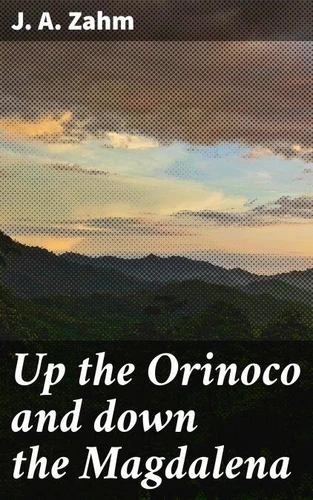
Up the Orinoco and down the Magdalena. Enriched edition. A Journey through South America's Waterways
Par : ,Formats :
Disponible dans votre compte client Decitre ou Furet du Nord dès validation de votre commande. Le format ePub est :
- Compatible avec une lecture sur My Vivlio (smartphone, tablette, ordinateur)
- Compatible avec une lecture sur liseuses Vivlio
- Pour les liseuses autres que Vivlio, vous devez utiliser le logiciel Adobe Digital Edition. Non compatible avec la lecture sur les liseuses Kindle, Remarkable et Sony
 , qui est-ce ?
Notre partenaire de plateforme de lecture numérique où vous retrouverez l'ensemble de vos ebooks gratuitement
Pour en savoir plus sur nos ebooks, consultez notre aide en ligne ici
C'est si simple ! Lisez votre ebook avec l'app Vivlio sur votre tablette, mobile ou ordinateur :

- Nombre de pages410
- FormatePub
- ISBN406-4-06-620303-0
- EAN4064066203030
- Date de parution19/05/2021
- Protection num.Digital Watermarking
- Taille2 Mo
- Infos supplémentairesepub
- ÉditeurGOOD PRESS
Résumé
In "Up the Orinoco and Down the Magdalena, " J. A. Zahm embarks on an evocative journey through the heart of South America, capturing the essence of its diverse landscapes, cultures, and peoples. The book is a rich tapestry of travelogue, adventure, and sociocultural reflection, characterized by Zahm's detailed observations and poetic prose. Written in the late 19th century, this work sits at the intersection of exploration narrative and burgeoning interest in ethnography, illuminating the natural wonders and human intricacies of the Orinoco and Magdalena rivers, while situating them within the broader context of Latin American literature of the period.
J. A. Zahm, an American priest and naturalist, was deeply influenced by his passion for science and exploration, which drove him to document his experiences in untamed territories. His scholarly background and love for nature informed his detailed and insightful approach to writing, as seen in his meticulous descriptions and the integration of scientific knowledge with lyrical narrative. Zahm's unique perspectives stem from his travels and interactions with various communities, providing a nuanced understanding of the region's complexities.
This captivating work is a must-read for those interested in exploration, cultural studies, and Latin American history. Zahm's engaging prose not only brings to life the stunning vistas of the Orinoco and Magdalena rivers but also invites readers to contemplate the broader implications of colonialism and human interaction with nature. Readers will find themselves transported into the landscapes he described so vividly and gain a deeper appreciation for the rich tapestry of cultures and histories that shape South America. In this enriched edition, we have carefully created added value for your reading experience: - Hand-picked Memorable Quotes shine a spotlight on moments of literary brilliance. - Interactive footnotes clarify unusual references, historical allusions, and archaic phrases for an effortless, more informed read.
J. A. Zahm, an American priest and naturalist, was deeply influenced by his passion for science and exploration, which drove him to document his experiences in untamed territories. His scholarly background and love for nature informed his detailed and insightful approach to writing, as seen in his meticulous descriptions and the integration of scientific knowledge with lyrical narrative. Zahm's unique perspectives stem from his travels and interactions with various communities, providing a nuanced understanding of the region's complexities.
This captivating work is a must-read for those interested in exploration, cultural studies, and Latin American history. Zahm's engaging prose not only brings to life the stunning vistas of the Orinoco and Magdalena rivers but also invites readers to contemplate the broader implications of colonialism and human interaction with nature. Readers will find themselves transported into the landscapes he described so vividly and gain a deeper appreciation for the rich tapestry of cultures and histories that shape South America. In this enriched edition, we have carefully created added value for your reading experience: - Hand-picked Memorable Quotes shine a spotlight on moments of literary brilliance. - Interactive footnotes clarify unusual references, historical allusions, and archaic phrases for an effortless, more informed read.