SOLDES
Jusqu'à -70% sur une sélection d'articles*

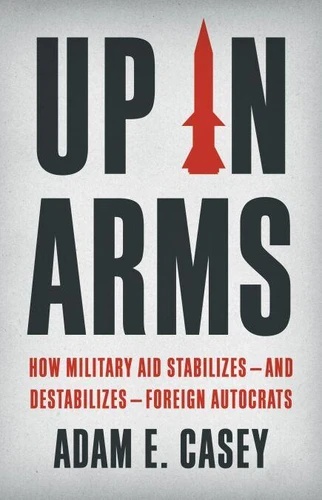
Up in Arms. How Military Aid Stabilizes—and Destabilizes—Foreign Autocrats
Par :Formats :
Disponible dans votre compte client Decitre ou Furet du Nord dès validation de votre commande. Le format ePub protégé est :
- Compatible avec une lecture sur My Vivlio (smartphone, tablette, ordinateur)
- Compatible avec une lecture sur liseuses Vivlio
- Pour les liseuses autres que Vivlio, vous devez utiliser le logiciel Adobe Digital Edition. Non compatible avec la lecture sur les liseuses Kindle, Remarkable et Sony
- Non compatible avec un achat hors France métropolitaine
 , qui est-ce ?
Notre partenaire de plateforme de lecture numérique où vous retrouverez l'ensemble de vos ebooks gratuitement
Pour en savoir plus sur nos ebooks, consultez notre aide en ligne ici
C'est si simple ! Lisez votre ebook avec l'app Vivlio sur votre tablette, mobile ou ordinateur :

- Nombre de pages336
- FormatePub
- ISBN978-1-5416-0402-5
- EAN9781541604025
- Date de parution02/04/2024
- Protection num.Adobe DRM
- Infos supplémentairesepub
- ÉditeurBasic Books
Résumé
An "extraordinary.must-read" (Steven Levitsky, New York Times-bestselling coauthor of How Democracies Die) look at how support from foreign superpowers propped up-and pulled down-authoritarian regimes during the Cold War, offering lessons for today's great power competition Throughout the Cold War, the United States and Soviet Union competed to prop up friendly dictatorships abroad. Today, it is commonly assumed that this military aid enabled the survival of allied autocrats, from Taiwan's Chiang Kai-shek to Ethiopia's Mengistu Haile Mariam. In Up in Arms, political scientist Adam E.
Casey rebuts the received wisdom: aid to autocracies often backfired during the Cold War. Casey draws on extensive original research to show that, despite billions poured into friendly regimes, US-backed dictators lasted in power no longer than those without outside help. In fact, American aid often unintentionally destabilized autocratic regimes. The United States encouraged foreign regimes to establish strong, independent armies like its own, but those armies often went on to lead coups themselves.
By contrast, the Soviets promoted the subordination of the army to the ruling regime, neutralizing the threat of military takeover. Ultimately, Casey concludes, it is subservient militaries-not outside aid-that help autocrats maintain power. In an era of renewed great power competition, Up in Arms offers invaluable insights into the unforeseen consequences of overseas meddling, revealing how military aid can help pull down dictators as often as it props them up.
Casey rebuts the received wisdom: aid to autocracies often backfired during the Cold War. Casey draws on extensive original research to show that, despite billions poured into friendly regimes, US-backed dictators lasted in power no longer than those without outside help. In fact, American aid often unintentionally destabilized autocratic regimes. The United States encouraged foreign regimes to establish strong, independent armies like its own, but those armies often went on to lead coups themselves.
By contrast, the Soviets promoted the subordination of the army to the ruling regime, neutralizing the threat of military takeover. Ultimately, Casey concludes, it is subservient militaries-not outside aid-that help autocrats maintain power. In an era of renewed great power competition, Up in Arms offers invaluable insights into the unforeseen consequences of overseas meddling, revealing how military aid can help pull down dictators as often as it props them up.