
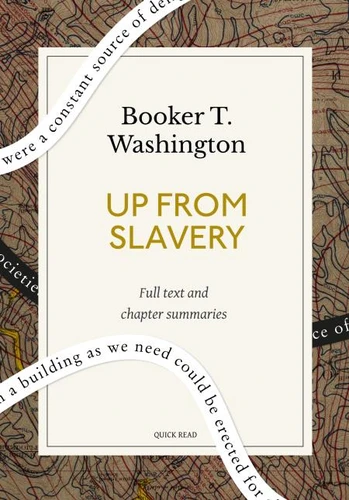
Up from Slavery: A Quick Read edition. An Autobiography
Par : ,Formats :
Disponible dans votre compte client Decitre ou Furet du Nord dès validation de votre commande. Le format Multi-format est :
- Pour les liseuses autres que Vivlio, vous devez utiliser le logiciel Adobe Digital Edition. Non compatible avec la lecture sur les liseuses Kindle, Remarkable et Sony
 , qui est-ce ?
Notre partenaire de plateforme de lecture numérique où vous retrouverez l'ensemble de vos ebooks gratuitement
Pour en savoir plus sur nos ebooks, consultez notre aide en ligne ici
C'est si simple ! Lisez votre ebook avec l'app Vivlio sur votre tablette, mobile ou ordinateur :

- FormatMulti-format
- ISBN978-2-38582-212-5
- EAN9782385822125
- Date de parution19/02/2024
- Protection num.pas de protection
- Infos supplémentairesMulti-Format
- ÉditeurQuick Read
Résumé
Discover a new way to read classics with Quick Read.
This Quick Read edition includes both the full text and a summary for each chapter.
- Reading time of the complete text: about 6 hours
- Reading time of the summarized text: 15 minutes
"Up from Slavery" is an autobiography written by Booker T. Washington, an American educator, in 1901. The book details Washington's journey from being enslaved as a child during the Civil War to becoming an influential figure in education.
Washington describes his experiences at the Hampton Institute and his efforts to establish vocational schools like the Tuskegee Institute to help Black and other marginalized communities gain valuable skills. He emphasizes the importance of combining academic subjects with practical training to reassure the white community of the value of educating Black people. The book was a best-seller and remains one of the most popular African-American autobiographies.
It provides insights into the challenges faced by African Americans during the Reconstruction Era and Washington's efforts to uplift his race through education and hard work. Despite criticism from figures like W. E. B. Du Bois, Washington's work had a significant impact on race relations in the United States.
Washington describes his experiences at the Hampton Institute and his efforts to establish vocational schools like the Tuskegee Institute to help Black and other marginalized communities gain valuable skills. He emphasizes the importance of combining academic subjects with practical training to reassure the white community of the value of educating Black people. The book was a best-seller and remains one of the most popular African-American autobiographies.
It provides insights into the challenges faced by African Americans during the Reconstruction Era and Washington's efforts to uplift his race through education and hard work. Despite criticism from figures like W. E. B. Du Bois, Washington's work had a significant impact on race relations in the United States.
A propos de Quick Read


4,99 €
4,99 €

4,99 €

4,99 €

4,99 €

4,99 €
4,99 €

4,99 €

4,99 €

4,99 €


4,99 €


4,99 €


4,99 €

4,99 €

4,99 €