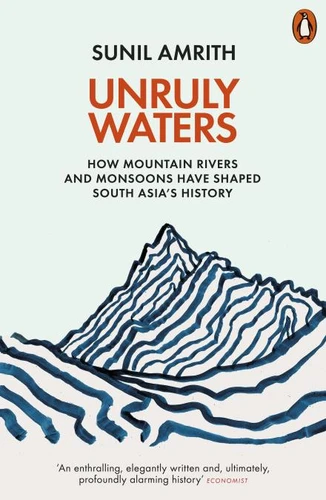
A bold new perspective on the history of South Asia, telling its story through its climate, and the long quest to tame its watersSouth Asia's history has been shaped by its waters. In Unruly Waters, historian Sunil Amrith reimagines this history through the stories of its rains, rivers, coasts, rivers and seas - and of the weather-watchers and engineers, mapmakers and farmers who have sought to control them.
He shows how fears and dreams of water have, throughout South Asia, shaped visions of political independence and economic development, provoked efforts to reshape nature through dams and pumps, and unleashed powerful tensions within and between nations. Every year humans have watched with overwhelming anxiety for the nature of that year's monsoon to be revealed, with entire populations living or dying on the outcome.
From the first small weather-reporting stations to today's satellites, the modern battle both to understand and manage water has literally been a matter of life or death. Today, Asian nations are racing to construct hundreds of dams in the Himalayas, with dire environmental impacts; hundreds of millions crowd into coastal cities threatened by cyclones and storm surges. In an age of climate change, this highly original work of history is essential reading for anyone seeking to understand not only Asia's past but its future.
A bold new perspective on the history of South Asia, telling its story through its climate, and the long quest to tame its watersSouth Asia's history has been shaped by its waters. In Unruly Waters, historian Sunil Amrith reimagines this history through the stories of its rains, rivers, coasts, rivers and seas - and of the weather-watchers and engineers, mapmakers and farmers who have sought to control them.
He shows how fears and dreams of water have, throughout South Asia, shaped visions of political independence and economic development, provoked efforts to reshape nature through dams and pumps, and unleashed powerful tensions within and between nations. Every year humans have watched with overwhelming anxiety for the nature of that year's monsoon to be revealed, with entire populations living or dying on the outcome.
From the first small weather-reporting stations to today's satellites, the modern battle both to understand and manage water has literally been a matter of life or death. Today, Asian nations are racing to construct hundreds of dams in the Himalayas, with dire environmental impacts; hundreds of millions crowd into coastal cities threatened by cyclones and storm surges. In an age of climate change, this highly original work of history is essential reading for anyone seeking to understand not only Asia's past but its future.


 , qui est-ce ?