SOLDES
Jusqu'à -70% sur une sélection d'articles*

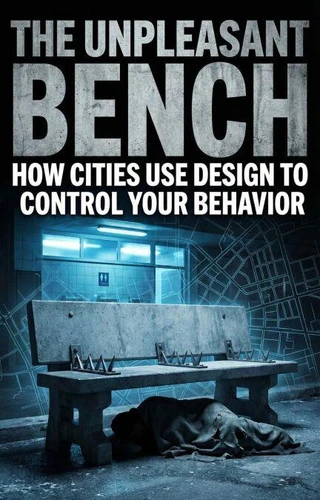
Unpleasant Bench. How Cities Use Design to Control Your Behavior
Par :Formats :
Disponible dans votre compte client Decitre ou Furet du Nord dès validation de votre commande. Le format ePub est :
- Compatible avec une lecture sur My Vivlio (smartphone, tablette, ordinateur)
- Compatible avec une lecture sur liseuses Vivlio
- Pour les liseuses autres que Vivlio, vous devez utiliser le logiciel Adobe Digital Edition. Non compatible avec la lecture sur les liseuses Kindle, Remarkable et Sony
 , qui est-ce ?
Notre partenaire de plateforme de lecture numérique où vous retrouverez l'ensemble de vos ebooks gratuitement
Pour en savoir plus sur nos ebooks, consultez notre aide en ligne ici
C'est si simple ! Lisez votre ebook avec l'app Vivlio sur votre tablette, mobile ou ordinateur :

- Nombre de pages165
- FormatePub
- ISBN978-3-565-25739-3
- EAN9783565257393
- Date de parution18/02/2026
- Protection num.pas de protection
- Taille769 Ko
- Infos supplémentairesepub
- ÉditeurEmphaloz Publishing House
Résumé
Have you ever noticed that park benches have extra armrests in the middle? Or that ledges outside banks have strange metal studs? Or that public bathrooms use eerie blue lighting? These aren't design choices for aesthetics; they are weapons. "The Unpleasant Bench" exposes the world of "Hostile Architecture" (or Defensive Design), the practice of engineering public spaces to exclude unwanted people, specifically the homeless and teenagers.
The book analyzes famous examples like the "Camden Bench, " a concrete slab designed to be impossible to sleep on, skate on, or graffiti.
It explores the subtle psychological manipulation of "The Mosquito, " a device that emits a high-frequency sound only young people can hear, used to disperse crowds. This is a critique of how we build our cities. It argues that by designing spaces that are hostile to "undesirables, " we make public spaces uncomfortable for everyone-the elderly, the disabled, and the weary. It challenges readers to look closer at the built environment and ask: Who is this city actually for?
It explores the subtle psychological manipulation of "The Mosquito, " a device that emits a high-frequency sound only young people can hear, used to disperse crowds. This is a critique of how we build our cities. It argues that by designing spaces that are hostile to "undesirables, " we make public spaces uncomfortable for everyone-the elderly, the disabled, and the weary. It challenges readers to look closer at the built environment and ask: Who is this city actually for?