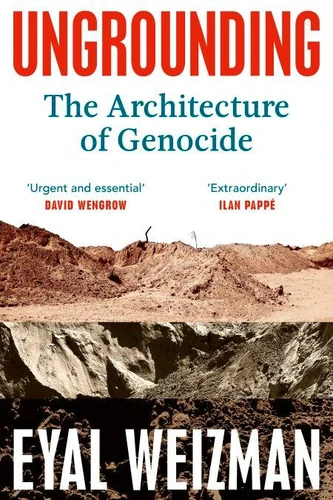
Ungrounding. The Architecture of Genocide
Par :Formats :
Disponible dans votre compte client Decitre ou Furet du Nord dès validation de votre commande. Le format ePub protégé est :
- Compatible avec une lecture sur My Vivlio (smartphone, tablette, ordinateur)
- Compatible avec une lecture sur liseuses Vivlio
- Pour les liseuses autres que Vivlio, vous devez utiliser le logiciel Adobe Digital Edition. Non compatible avec la lecture sur les liseuses Kindle, Remarkable et Sony
- Non compatible avec un achat hors France métropolitaine
 , qui est-ce ?
Notre partenaire de plateforme de lecture numérique où vous retrouverez l'ensemble de vos ebooks gratuitement
Pour en savoir plus sur nos ebooks, consultez notre aide en ligne ici
C'est si simple ! Lisez votre ebook avec l'app Vivlio sur votre tablette, mobile ou ordinateur :

- Nombre de pages416
- FormatePub
- ISBN978-1-5299-3861-6
- EAN9781529938616
- Date de parution07/05/2026
- Protection num.Adobe DRM
- Infos supplémentairesepub
- ÉditeurVintage Digital
Résumé
A devastating, meticulous account of the history of Israel's destruction of Gaza from an acclaimed architect and investigator'Urgent and essential' DAVID WENGROW'Extraordinary' ILAN PAPPÉEyal Weizman is one of the world's leading experts on the relationship between violence, conflict and the environment, both built and natural. As director of the organisation Forensic Architecture, he and his team of interdisciplinary researchers document acts of state crimes and human rights violations around the world.
Since 2023, the group has worked to produce evidence for the International Court of Justice's genocide case against Israel. In Ungrounding, Weizman draws on that research to bring us on an eye-opening journey across time and into the 'deep cartography' of the area extending from Gaza's subterranean tunnels through to its militarised topography, its unique soil, settlements and barriers. He catalogues, in unflinching and forensic detail, the Israeli campaigns of violence and displacement that have reshaped the region in an effort to make Gaza and its surrounding areas unliveable.
Taking us through the broader geographic and historical context, from the Nakba in 1948 to the present day, Ungrounding establishes that architectural and territorial analysis is key to understanding the relationship between coloniser and colonised - and how Israel's actions after 7 October escalated into violence so extreme and so far-reaching as to, Weizman argues, meet the definition of genocide.
Deeply informative and profoundly affecting in its scope and precision, and illustrated with dozens of original images, maps and diagrams, Ungrounding is an essential document of atrocity in our time.
Since 2023, the group has worked to produce evidence for the International Court of Justice's genocide case against Israel. In Ungrounding, Weizman draws on that research to bring us on an eye-opening journey across time and into the 'deep cartography' of the area extending from Gaza's subterranean tunnels through to its militarised topography, its unique soil, settlements and barriers. He catalogues, in unflinching and forensic detail, the Israeli campaigns of violence and displacement that have reshaped the region in an effort to make Gaza and its surrounding areas unliveable.
Taking us through the broader geographic and historical context, from the Nakba in 1948 to the present day, Ungrounding establishes that architectural and territorial analysis is key to understanding the relationship between coloniser and colonised - and how Israel's actions after 7 October escalated into violence so extreme and so far-reaching as to, Weizman argues, meet the definition of genocide.
Deeply informative and profoundly affecting in its scope and precision, and illustrated with dozens of original images, maps and diagrams, Ungrounding is an essential document of atrocity in our time.