In 1801, the nominations to the French Institut des sciences et des arts, the former French Academy, included Immanuel Kant, Johann Gottfried Herder, Thomas Jefferson, Friedrich Klopstock, Arthur Young, Joseph Priestly and Carsten Niebuhr. The first six are seminal figures of the 18th Century, but who was Carsten Niebuhr and why was he considered worthy of membership in Europe's most prestigious society? The answer is that it was Niebuhr who gave to European readers perhaps the most accurate, multifaceted and open-minded portrait of the Middle East published in the 18th Century, an account that is still highly respected for its scholarship today.
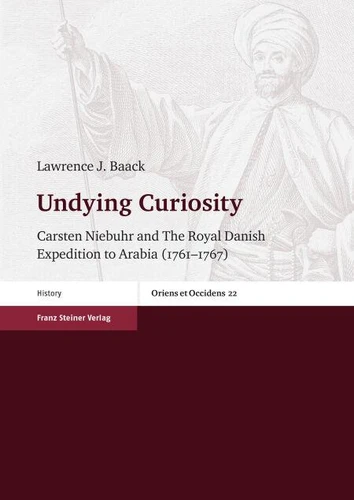
This e-book is the first comprehensive, multidisciplinary study of his achievement and that of his colleagues as members of the Danish Expedition to Arabia. It is an examination of an encounter between the Northern European Enlightenment and the cultural, physical and ecological domains of the Middle East, and of the knowledge in many scholarly fields that this encounter produced. Drawing on extensive archival research, including field journals and correspondence, it paints in the context of the 18th Century, a vivid picture of the ideas behind, the field experience of, and the scientific results produced by what the London Times has called "One of the most extraordinary journeys of all time."
In 1801, the nominations to the French Institut des sciences et des arts, the former French Academy, included Immanuel Kant, Johann Gottfried Herder, Thomas Jefferson, Friedrich Klopstock, Arthur Young, Joseph Priestly and Carsten Niebuhr. The first six are seminal figures of the 18th Century, but who was Carsten Niebuhr and why was he considered worthy of membership in Europe's most prestigious society? The answer is that it was Niebuhr who gave to European readers perhaps the most accurate, multifaceted and open-minded portrait of the Middle East published in the 18th Century, an account that is still highly respected for its scholarship today.
This e-book is the first comprehensive, multidisciplinary study of his achievement and that of his colleagues as members of the Danish Expedition to Arabia. It is an examination of an encounter between the Northern European Enlightenment and the cultural, physical and ecological domains of the Middle East, and of the knowledge in many scholarly fields that this encounter produced. Drawing on extensive archival research, including field journals and correspondence, it paints in the context of the 18th Century, a vivid picture of the ideas behind, the field experience of, and the scientific results produced by what the London Times has called "One of the most extraordinary journeys of all time."