SOLDES
Jusqu'à -70% sur une sélection d'articles*

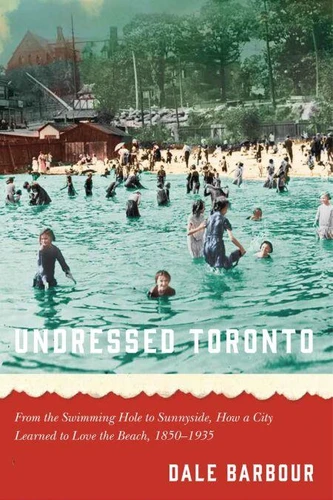
Undressed Toronto. From the Swimming Hole to Sunnyside, How a City Learned to Love the Beach, 1850–1935
Par :Formats :
Disponible dans votre compte client Decitre ou Furet du Nord dès validation de votre commande. Le format ePub est :
- Compatible avec une lecture sur My Vivlio (smartphone, tablette, ordinateur)
- Compatible avec une lecture sur liseuses Vivlio
- Pour les liseuses autres que Vivlio, vous devez utiliser le logiciel Adobe Digital Edition. Non compatible avec la lecture sur les liseuses Kindle, Remarkable et Sony
 , qui est-ce ?
Notre partenaire de plateforme de lecture numérique où vous retrouverez l'ensemble de vos ebooks gratuitement
Pour en savoir plus sur nos ebooks, consultez notre aide en ligne ici
C'est si simple ! Lisez votre ebook avec l'app Vivlio sur votre tablette, mobile ou ordinateur :

- Nombre de pages328
- FormatePub
- ISBN978-0-88755-949-5
- EAN9780887559495
- Date de parution01/10/2021
- Protection num.Digital Watermarking
- Taille14 Mo
- Infos supplémentairesepub
- ÉditeurUniversity of Manitoba Press
Résumé
WINNER J. J. Talman Award, Ontario Historical Society (2022)
NOMINATED Toronto Heritage Book Award (2022)
Undressed Toronto looks at the life of the swimming hole and considers how Toronto turned boys skinny dipping into comforting anti-modernist folk figures. By digging into the vibrant social life of these spaces, Barbour challenges narratives that pollution and industrialization in the nineteenth century destroyed the relationship between Torontonians and their rivers and waterfront.
Instead, we find that these areas were co-opted and transformed into recreation spaces: often with the acceptance of indulgent city officials. While we take the beach for granted today, it was a novel form of public space in the nineteenth century and Torontonians had to decide how it would work in their city. To create a public beach, bathing needed to be transformed from the predominantly nude male privilege that it had been in the mid-nineteenth century into an activity that women and men could participate in together.
That transformation required negotiating and establishing rules for how people would dress and behave when they bathed and setting aside or creating distinct environments for bathing. Undressed Toronto challenges assumptions about class, the urban environment, and the presentation of the naked body. It explores anxieties about modernity and masculinity and the weight of nostalgia in public perceptions and municipal regulation of public bathing in five Toronto environments that showcase distinct moments in the transition from vernacular bathing to the public beach: the city's central waterfront, Toronto Island, the Don River, the Humber River, and Sunnyside Beach on Toronto's western shoreline.
Instead, we find that these areas were co-opted and transformed into recreation spaces: often with the acceptance of indulgent city officials. While we take the beach for granted today, it was a novel form of public space in the nineteenth century and Torontonians had to decide how it would work in their city. To create a public beach, bathing needed to be transformed from the predominantly nude male privilege that it had been in the mid-nineteenth century into an activity that women and men could participate in together.
That transformation required negotiating and establishing rules for how people would dress and behave when they bathed and setting aside or creating distinct environments for bathing. Undressed Toronto challenges assumptions about class, the urban environment, and the presentation of the naked body. It explores anxieties about modernity and masculinity and the weight of nostalgia in public perceptions and municipal regulation of public bathing in five Toronto environments that showcase distinct moments in the transition from vernacular bathing to the public beach: the city's central waterfront, Toronto Island, the Don River, the Humber River, and Sunnyside Beach on Toronto's western shoreline.