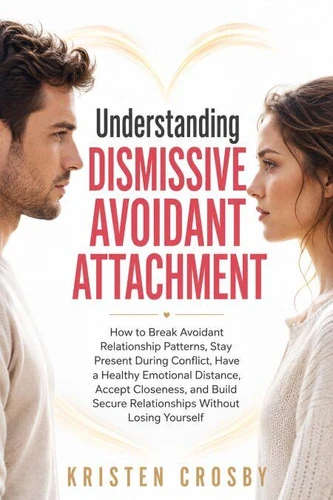
Do you pull away when relationships become emotionally intense, even when you genuinely care about the person beside you?Understanding Dismissive Avoidant Attachment offers a practical, research-informed look at why closeness, dependence, conflict, and emotional vulnerability can sometimes trigger the urge to withdraw. Instead of treating avoidant attachment as a permanent personality label, Kristen Crosby focuses on everyday behaviors that can be recognized, understood, and changed.
You will learn how emotional distance develops, how healthy independence differs from defensive self-reliance, and why certain conversations can suddenly make space feel safer than connection. Inside, you will learn how to:. Recognize the triggers that lead to emotional withdrawal. Notice the early signs that you are beginning to shut down. Question distancing thoughts before acting on them. Take space without disappearing from the relationship.
Stay engaged during difficult conversations. Communicate needs and boundaries more clearly. Accept appropriate support without losing your independence. Practice vulnerability without forcing emotional openness. Repair disconnection after withdrawal or conflict. Identify recurring relationship patterns before repeating them. Develop behaviors associated with greater security and trust. Build closeness while protecting your individualityThis book does not ask you to give up privacy, independence, boundaries, or time alone.
It shows you how to distinguish healthy emotional distance from automatic withdrawal so that closeness becomes a choice rather than something you repeatedly escape. Whether you recognize dismissive-avoidant tendencies in yourself or want a clearer understanding of emotional distance in relationships, this guide provides practical tools for healthier communication, stronger boundaries, greater emotional awareness, and more secure connection.
Do you pull away when relationships become emotionally intense, even when you genuinely care about the person beside you?Understanding Dismissive Avoidant Attachment offers a practical, research-informed look at why closeness, dependence, conflict, and emotional vulnerability can sometimes trigger the urge to withdraw. Instead of treating avoidant attachment as a permanent personality label, Kristen Crosby focuses on everyday behaviors that can be recognized, understood, and changed.
You will learn how emotional distance develops, how healthy independence differs from defensive self-reliance, and why certain conversations can suddenly make space feel safer than connection. Inside, you will learn how to:. Recognize the triggers that lead to emotional withdrawal. Notice the early signs that you are beginning to shut down. Question distancing thoughts before acting on them. Take space without disappearing from the relationship.
Stay engaged during difficult conversations. Communicate needs and boundaries more clearly. Accept appropriate support without losing your independence. Practice vulnerability without forcing emotional openness. Repair disconnection after withdrawal or conflict. Identify recurring relationship patterns before repeating them. Develop behaviors associated with greater security and trust. Build closeness while protecting your individualityThis book does not ask you to give up privacy, independence, boundaries, or time alone.
It shows you how to distinguish healthy emotional distance from automatic withdrawal so that closeness becomes a choice rather than something you repeatedly escape. Whether you recognize dismissive-avoidant tendencies in yourself or want a clearer understanding of emotional distance in relationships, this guide provides practical tools for healthier communication, stronger boundaries, greater emotional awareness, and more secure connection.


 , qui est-ce ?