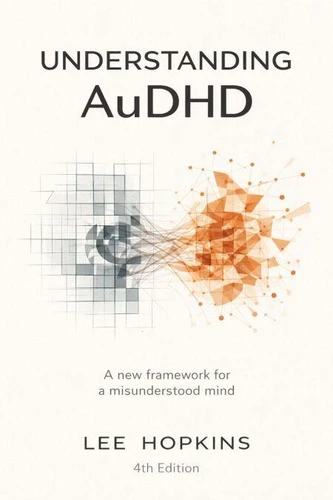
AuDHD is not two conditions. It is one system. For decades, autism and ADHD have been treated as separate diagnoses that sometimes overlap. The result has been confusion, misdiagnosis, and advice that often contradicts itself. This book makes a different argument. Core positioningIn Understanding AuDHD (4th Edition), counselling psychologist Lee Hopkins presents a new framework: AuDHD is not a comorbidity It is a distinct neurological profile The interaction is the condition Drawing on current research, clinical insight, and lived experience, this book explains why the traditional model fails, and what becomes visible when you replace it. What's insideYou'll learn: Why autism + ADHD is the wrong lens The emerging science behind AuDHD as its own profile Why executive function feels both rigid and unreliable The sensory paradox: seeking and avoiding at the same time The real cost of masking, including long-term physiological impact How allostatic load shapes fatigue, burnout, and health Practical tools for daily life, relationships, and work How to navigate diagnosis, healthcare, and medication decisions DifferentiationThis is not a surface-level guide.
It is: Clinically grounded without being academic Direct without being simplistic Honest about both strengths and costs Written from inside the experience, not just about it It challenges the idea that individuals are failing, and asks whether the systems they live in are the real source of strain. AudienceThis book is for: Adults who suspect or know they are AuDHD Late-diagnosed readers trying to reframe their lives Clinicians questioning existing diagnostic models Partners and family members seeking real understanding CloseIf the existing explanations have never quite fit, this book offers a clearer one.
AuDHD is not two conditions. It is one system. For decades, autism and ADHD have been treated as separate diagnoses that sometimes overlap. The result has been confusion, misdiagnosis, and advice that often contradicts itself. This book makes a different argument. Core positioningIn Understanding AuDHD (4th Edition), counselling psychologist Lee Hopkins presents a new framework: AuDHD is not a comorbidity It is a distinct neurological profile The interaction is the condition Drawing on current research, clinical insight, and lived experience, this book explains why the traditional model fails, and what becomes visible when you replace it. What's insideYou'll learn: Why autism + ADHD is the wrong lens The emerging science behind AuDHD as its own profile Why executive function feels both rigid and unreliable The sensory paradox: seeking and avoiding at the same time The real cost of masking, including long-term physiological impact How allostatic load shapes fatigue, burnout, and health Practical tools for daily life, relationships, and work How to navigate diagnosis, healthcare, and medication decisions DifferentiationThis is not a surface-level guide.
It is: Clinically grounded without being academic Direct without being simplistic Honest about both strengths and costs Written from inside the experience, not just about it It challenges the idea that individuals are failing, and asks whether the systems they live in are the real source of strain. AudienceThis book is for: Adults who suspect or know they are AuDHD Late-diagnosed readers trying to reframe their lives Clinicians questioning existing diagnostic models Partners and family members seeking real understanding CloseIf the existing explanations have never quite fit, this book offers a clearer one.


 , qui est-ce ?