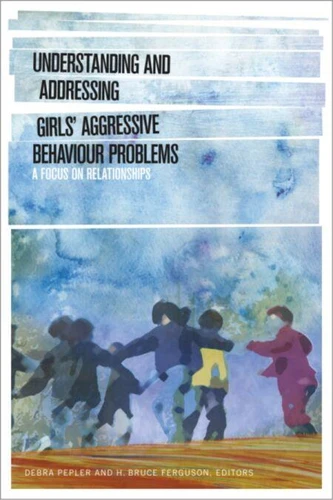
Understanding and Addressing Girls' Aggressive Behaviour Problems reflects a major shift in understanding children's aggressive-behaviour problems. Researchers used to study what went wrong with a troubled child and needed to be fixed; we now aim to understand what is going wrong in children's relationships that might create, exacerbate, and maintain aggressive-behaviour problems in childhood and adolescence.
In this volume, leading researchers in the aggression field examine how problems develop for boys and girls in relationships and how we can help children to develop healthy relationships. Individual chapters explore biological and social contexts, including physical health and relationship problems that might underlie the development of aggressive behaviour problems. The impact of relationships on girls' development is illustrated to be particularly important for Aboriginal girls.
Contributors discuss prevention and intervention strategies that help aggressive children build the requisite skills and relationship capacities and also shift dynamics within critical social contexts, such as the family, peer group, classroom, and school. The support of healthy development not only of children but of their parents and other important adults in their lives, including teachers has been shown to be effective in reducing the burden of suffering associated with aggression among children and adolescents-for youth themselves as well as their families, peers, schools, communities, and society.
Understanding and Addressing Girls' Aggressive Behaviour Problems reflects a major shift in understanding children's aggressive-behaviour problems. Researchers used to study what went wrong with a troubled child and needed to be fixed; we now aim to understand what is going wrong in children's relationships that might create, exacerbate, and maintain aggressive-behaviour problems in childhood and adolescence.
In this volume, leading researchers in the aggression field examine how problems develop for boys and girls in relationships and how we can help children to develop healthy relationships. Individual chapters explore biological and social contexts, including physical health and relationship problems that might underlie the development of aggressive behaviour problems. The impact of relationships on girls' development is illustrated to be particularly important for Aboriginal girls.
Contributors discuss prevention and intervention strategies that help aggressive children build the requisite skills and relationship capacities and also shift dynamics within critical social contexts, such as the family, peer group, classroom, and school. The support of healthy development not only of children but of their parents and other important adults in their lives, including teachers has been shown to be effective in reducing the burden of suffering associated with aggression among children and adolescents-for youth themselves as well as their families, peers, schools, communities, and society.