SOLDES
Jusqu'à -70% sur une sélection d'articles*

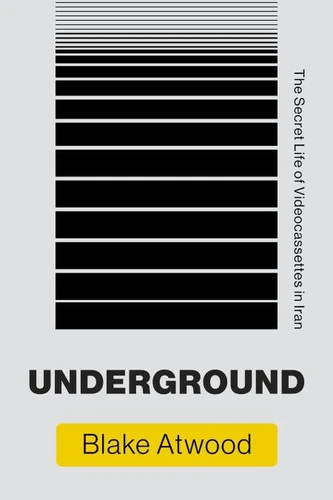
Underground. The Secret Life of Videocassettes in Iran
Par :Formats :
Disponible dans votre compte client Decitre ou Furet du Nord dès validation de votre commande. Le format ePub protégé est :
- Compatible avec une lecture sur My Vivlio (smartphone, tablette, ordinateur)
- Compatible avec une lecture sur liseuses Vivlio
- Pour les liseuses autres que Vivlio, vous devez utiliser le logiciel Adobe Digital Edition. Non compatible avec la lecture sur les liseuses Kindle, Remarkable et Sony
- Non compatible avec un achat hors France métropolitaine
 , qui est-ce ?
Notre partenaire de plateforme de lecture numérique où vous retrouverez l'ensemble de vos ebooks gratuitement
Pour en savoir plus sur nos ebooks, consultez notre aide en ligne ici
C'est si simple ! Lisez votre ebook avec l'app Vivlio sur votre tablette, mobile ou ordinateur :

- Nombre de pages320
- FormatePub
- ISBN978-0-262-36609-0
- EAN9780262366090
- Date de parution28/09/2021
- Protection num.Adobe DRM
- Taille15 Mo
- Infos supplémentairesepub
- ÉditeurThe MIT Press
Résumé
How Iranians forged a vibrant, informal video distribution infrastructure when their government banned all home video technology in 1983. In 1983, the Iranian government banned the personal use of home video technology. In Underground, Blake Atwood recounts how in response to the ban, technology enthusiasts, cinephiles, entrepreneurs, and everyday citizens forged an illegal but complex underground system for video distribution.
Atwood draws on archival sources including trade publications, newspapers, memoirs, films, and laws, but at the heart of the book lies a corpus of oral history interviews conducted with participants in the underground. He argues that videocassettes helped to institutionalize the broader underground within the Islamic Republic. As Atwood shows, the videocassette underground reveals a great deal about how people construct vibrant cultures beneath repressive institutions.
It was not just that Iranians gained access to banned movies, but rather that they established routes, acquired technical knowledge, broke the law, and created rituals by passing and trading plastic videocassettes. As material objects, the videocassettes were a means of negotiating the power of the state and the agency of its citizens. By the time the Ministry of Culture and Islamic Guidance lifted the ban in 1994, millions of videocassettes were circulating efficiently and widely throughout the country.
The very presence of a video underground signaled the failure of state policy to regulate media. Embedded in the informal infrastructure--even in the videocassettes themselves--was the triumph of everyday people over the state.
Atwood draws on archival sources including trade publications, newspapers, memoirs, films, and laws, but at the heart of the book lies a corpus of oral history interviews conducted with participants in the underground. He argues that videocassettes helped to institutionalize the broader underground within the Islamic Republic. As Atwood shows, the videocassette underground reveals a great deal about how people construct vibrant cultures beneath repressive institutions.
It was not just that Iranians gained access to banned movies, but rather that they established routes, acquired technical knowledge, broke the law, and created rituals by passing and trading plastic videocassettes. As material objects, the videocassettes were a means of negotiating the power of the state and the agency of its citizens. By the time the Ministry of Culture and Islamic Guidance lifted the ban in 1994, millions of videocassettes were circulating efficiently and widely throughout the country.
The very presence of a video underground signaled the failure of state policy to regulate media. Embedded in the informal infrastructure--even in the videocassettes themselves--was the triumph of everyday people over the state.