
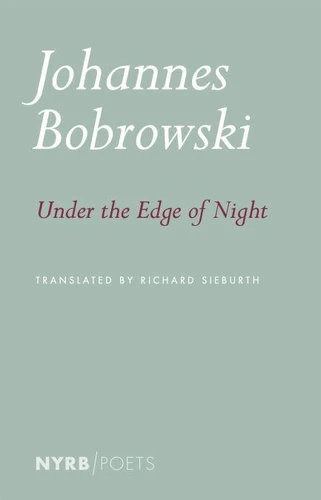
Under the Edge of Night
Par : ,Formats :
Disponible dans votre compte client Decitre ou Furet du Nord dès validation de votre commande. Le format ePub protégé est :
- Compatible avec une lecture sur My Vivlio (smartphone, tablette, ordinateur)
- Compatible avec une lecture sur liseuses Vivlio
- Pour les liseuses autres que Vivlio, vous devez utiliser le logiciel Adobe Digital Edition. Non compatible avec la lecture sur les liseuses Kindle, Remarkable et Sony
- Non compatible avec un achat hors France métropolitaine
 , qui est-ce ?
Notre partenaire de plateforme de lecture numérique où vous retrouverez l'ensemble de vos ebooks gratuitement
Pour en savoir plus sur nos ebooks, consultez notre aide en ligne ici
C'est si simple ! Lisez votre ebook avec l'app Vivlio sur votre tablette, mobile ou ordinateur :

- Nombre de pages496
- Date de parution27/10/2026
- FormatePub
- ISBN8896230984
- EAN9798896230984
- Protection num.Adobe DRM
- Infos supplémentairesepub
- ÉditeurNYRB Poets
Résumé
Odes and elegies set in Prussia, Lithuania, and on the killing fields of the Eastern Front during World War II. These are war wounds in poetic form, bringing buried history and oppression powerfully into the light. Often compared to the poetry of Paul Celan and Nelly Sachs, the postwar verse of Johannes Bobrowski is set in the East Prussian and Lithuanian landscapes of his childhood, and in the killing fields he witnessed as a young German soldier on the eastern front during World War I.
Bobrowski described his poems as his "war wounds, " and in these odes and elegies of the mid-fifties and early sixties one can see and hear his belated healing process at work: to bring what has lain buried and forgotten back to the surface, in the hope that Germany's historic oppression of Jewish, Slavic, Baltic, and Roma people might finally be honestly addressed. In this new dual-language and freshly annotated translation, the idiosyncratic rhythms and imagistic urgencies of Bobrowski's verse come to life in Richard Sieburth's English.
Bobrowski described his poems as his "war wounds, " and in these odes and elegies of the mid-fifties and early sixties one can see and hear his belated healing process at work: to bring what has lain buried and forgotten back to the surface, in the hope that Germany's historic oppression of Jewish, Slavic, Baltic, and Roma people might finally be honestly addressed. In this new dual-language and freshly annotated translation, the idiosyncratic rhythms and imagistic urgencies of Bobrowski's verse come to life in Richard Sieburth's English.