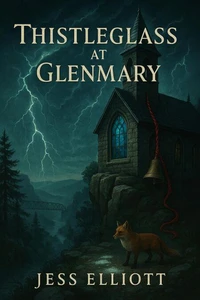
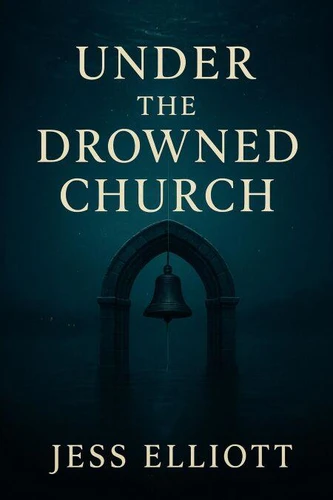
When the reservoir drops at night, the bell beneath it learns to speak. Glisten has spent years fixing other people's emergencies-broken machines, bad wiring, neighbors with more need than time. But when a drowned church begins tolling through concrete and glass, the small mountain town she loves starts losing minutes, breath, and sense. Doors fog with mouth-shaped rings. Footprints appear where no one stands.
And at 1:05 a.m., the bell counts-one through six-before Seven arrives and asks. With a sharp-minded folklorist (Mara), a taciturn dam operator (Harlan), and a sheriff who believes in memos and miracles in equal measure, Glisten builds a grammar to fight a haunting: salt combs on thresholds, rope that refuses to become a ladder, light laid straight as a road, and a single rule that keeps them alive-count backward and never answer with a word.
As the town gathers behind duct-tape signs that read THANK YOU, NOT TODAY, the bell changes its tactics. Names surface. Debts come due. To bring the lost back without opening a door that won't close, Glisten must pay in exact change-metal, muscle, and the voice she can't afford to spend. Folk horror with a working-class spine, Under the Drowned Church is a tense, deeply human story about boundaries, community, and the rude, ordinary courage it takes to make a mouth stop asking.
When the reservoir drops at night, the bell beneath it learns to speak. Glisten has spent years fixing other people's emergencies-broken machines, bad wiring, neighbors with more need than time. But when a drowned church begins tolling through concrete and glass, the small mountain town she loves starts losing minutes, breath, and sense. Doors fog with mouth-shaped rings. Footprints appear where no one stands.
And at 1:05 a.m., the bell counts-one through six-before Seven arrives and asks. With a sharp-minded folklorist (Mara), a taciturn dam operator (Harlan), and a sheriff who believes in memos and miracles in equal measure, Glisten builds a grammar to fight a haunting: salt combs on thresholds, rope that refuses to become a ladder, light laid straight as a road, and a single rule that keeps them alive-count backward and never answer with a word.
As the town gathers behind duct-tape signs that read THANK YOU, NOT TODAY, the bell changes its tactics. Names surface. Debts come due. To bring the lost back without opening a door that won't close, Glisten must pay in exact change-metal, muscle, and the voice she can't afford to spend. Folk horror with a working-class spine, Under the Drowned Church is a tense, deeply human story about boundaries, community, and the rude, ordinary courage it takes to make a mouth stop asking.

 , qui est-ce ?