SOLDES
Jusqu'à -70% sur une sélection d'articles*

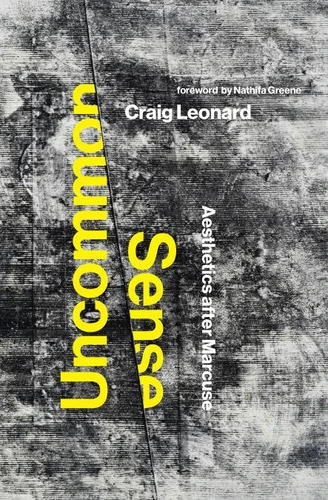
Uncommon Sense. Aesthetics after Marcuse
Par : ,Formats :
Disponible dans votre compte client Decitre ou Furet du Nord dès validation de votre commande. Le format ePub protégé est :
- Compatible avec une lecture sur My Vivlio (smartphone, tablette, ordinateur)
- Compatible avec une lecture sur liseuses Vivlio
- Pour les liseuses autres que Vivlio, vous devez utiliser le logiciel Adobe Digital Edition. Non compatible avec la lecture sur les liseuses Kindle, Remarkable et Sony
- Non compatible avec un achat hors France métropolitaine
 , qui est-ce ?
Notre partenaire de plateforme de lecture numérique où vous retrouverez l'ensemble de vos ebooks gratuitement
Pour en savoir plus sur nos ebooks, consultez notre aide en ligne ici
C'est si simple ! Lisez votre ebook avec l'app Vivlio sur votre tablette, mobile ou ordinateur :

- Nombre de pages256
- FormatePub
- ISBN978-0-262-37167-4
- EAN9780262371674
- Date de parution27/09/2022
- Protection num.Adobe DRM
- Taille849 Ko
- Infos supplémentairesepub
- ÉditeurThe MIT Press
Résumé
An examination of Herbert Marcuse's political claim for the aesthetic dimension, focusing on defamiliarization as a means of developing radical sensibility. In Uncommon Sense, Craig Leonard argues for the contemporary relevance of the aesthetic theory of Herbert Marcuse-an original member of the Frankfurt School and icon of the New Left-while also acknowledging his philosophical limits. His account reinvigorates Marcuse for contemporary readers, putting his aesthetic theory into dialogue with antiracist and anti-capitalist activism.
Leonard emphasizes several key terms not previously analyzed within Marcuse's aesthetics, including defamiliarization, anti-art, and habit. In particular, he focuses on the centrality of defamiliarization-a subversion of common sense that can be a means to the development of what Marcuse refers to as "radical sensibility." Leonard brings forward Marcuse's claim that the aesthetic dimension is political because of its refusal to operate according to the repressive common sense that establishes and maintains relationships dictated by advanced capitalism.
For Marcuse, defamiliarization is at the center of the aesthetic dimension, offering the direct means of stimulating its political potential. Leonard expands upon Marcuse's aesthetics by drawing on the work of Sylvia Wynter, going beyond Marcuse's predominantly European and patrilineal intellectual framework-while still retaining his aesthetic theory's fundamental characteristics-toward a human dimension requiring decolonial, feminist, antiracist, and counterpoetic perspectives.
Leonard emphasizes several key terms not previously analyzed within Marcuse's aesthetics, including defamiliarization, anti-art, and habit. In particular, he focuses on the centrality of defamiliarization-a subversion of common sense that can be a means to the development of what Marcuse refers to as "radical sensibility." Leonard brings forward Marcuse's claim that the aesthetic dimension is political because of its refusal to operate according to the repressive common sense that establishes and maintains relationships dictated by advanced capitalism.
For Marcuse, defamiliarization is at the center of the aesthetic dimension, offering the direct means of stimulating its political potential. Leonard expands upon Marcuse's aesthetics by drawing on the work of Sylvia Wynter, going beyond Marcuse's predominantly European and patrilineal intellectual framework-while still retaining his aesthetic theory's fundamental characteristics-toward a human dimension requiring decolonial, feminist, antiracist, and counterpoetic perspectives.