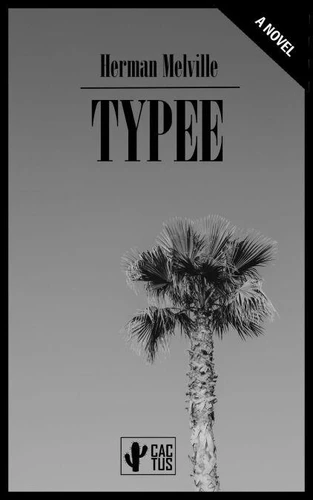
In the summer of 1842, a young sailor named Herman Melville deserted the whaling ship Acushnet on the remote Marquesan island of Nuku Hiva. With a companion known only as "Toby, " he fled into the jungle-covered mountains, descending-exhausted, starving, and injured-into a valley said to be occupied by the Typee, a tribe of fierce warriors with a fearsome reputation: cannibalism.
To the narrator, "Tommo, " the Typee at first appear as noble savages inhabiting an earthly paradise: a world of lush breadfruit groves, crystalline streams, and the sensuous, shawl-sailed canoe of the maiden Fayaway.
Assigned a devoted valet, Kory-Kory, and treated as an honored guest by the chieftain Mehevi, Tommo finds himself seduced by a life free from the "ruthless, industrial, civilized world" .
Yet the garden has a shadow. Is he a guest-or a prisoner? Why is his leg mysteriously swelling, refusing to heal? And what lies beneath the taboo lids of the carved wooden boxes?
Simultaneously a rollicking adventure story, a scandalous erotic fantasy, and a radical anti-colonial polemic, Typee was the book that made Melville famous at twenty-six.
Censored for its "unholy" depictions of Polynesian sensuality and its biting critique of missionaries, it remains a foundational text of the South Seas narrative.
In the summer of 1842, a young sailor named Herman Melville deserted the whaling ship Acushnet on the remote Marquesan island of Nuku Hiva. With a companion known only as "Toby, " he fled into the jungle-covered mountains, descending-exhausted, starving, and injured-into a valley said to be occupied by the Typee, a tribe of fierce warriors with a fearsome reputation: cannibalism.
To the narrator, "Tommo, " the Typee at first appear as noble savages inhabiting an earthly paradise: a world of lush breadfruit groves, crystalline streams, and the sensuous, shawl-sailed canoe of the maiden Fayaway.
Assigned a devoted valet, Kory-Kory, and treated as an honored guest by the chieftain Mehevi, Tommo finds himself seduced by a life free from the "ruthless, industrial, civilized world" .
Yet the garden has a shadow. Is he a guest-or a prisoner? Why is his leg mysteriously swelling, refusing to heal? And what lies beneath the taboo lids of the carved wooden boxes?
Simultaneously a rollicking adventure story, a scandalous erotic fantasy, and a radical anti-colonial polemic, Typee was the book that made Melville famous at twenty-six.
Censored for its "unholy" depictions of Polynesian sensuality and its biting critique of missionaries, it remains a foundational text of the South Seas narrative.

 , qui est-ce ?