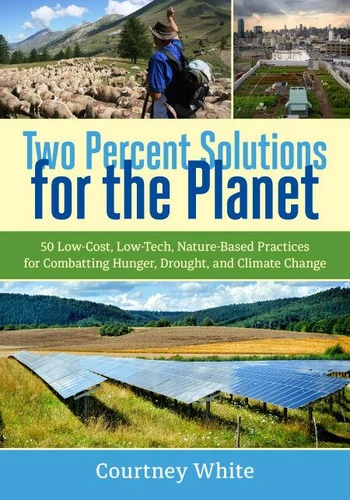
Two Percent Solutions for the Planet. 50 Low-Cost, Low-Tech, Nature-Based Practices for Combatting Hunger, Drought, and Climate Change
Par :Formats :
Disponible dans votre compte client Decitre ou Furet du Nord dès validation de votre commande. Le format ePub protégé est :
- Compatible avec une lecture sur My Vivlio (smartphone, tablette, ordinateur)
- Compatible avec une lecture sur liseuses Vivlio
- Pour les liseuses autres que Vivlio, vous devez utiliser le logiciel Adobe Digital Edition. Non compatible avec la lecture sur les liseuses Kindle, Remarkable et Sony
- Non compatible avec un achat hors France métropolitaine
 , qui est-ce ?
Notre partenaire de plateforme de lecture numérique où vous retrouverez l'ensemble de vos ebooks gratuitement
Pour en savoir plus sur nos ebooks, consultez notre aide en ligne ici
C'est si simple ! Lisez votre ebook avec l'app Vivlio sur votre tablette, mobile ou ordinateur :

- Nombre de pages240
- FormatePub
- ISBN978-1-60358-618-4
- EAN9781603586184
- Date de parution21/09/2015
- Protection num.Adobe DRM
- Taille39 Mo
- Infos supplémentairesepub
- ÉditeurChelsea Green
Résumé
Two Percent Solutions for the Planet profiles fifty innovative practices that soak up carbon dioxide in soils, reduce energy use, sustainably intensify food production, and increase water quality. The "two percent" refers to: the amount of new carbon in the soil needed to reap a wide variety of ecological and economic benefits; the percentage of the nation's population who are farmers and ranchers; and the low financial cost (in terms of GDP) needed to get this work done.
As White explained in Grass, Soil, Hope, a highly efficient carbon cycle captures, stores, releases, and recaptures biochemical energy, mitigating climate change, increasing water storage capacities in soil, and making green plants grow. Best of all, we don't have to invent anything new-a wide variety of innovative ideas and methods that put carbon back into the soil have been field-tested and proven to be practical and profitable.
They're mostly low-tech, too, relying on natural resources such as sunlight, green plants, animals, compost, beavers, creeks, and more. In Two Percent Solutions for the Planet, White expands what he calls the "regenerative toolbox, " to include holistic grazing, edible forests, biochar, weed-eating livestock, food co-ops, keyline plowing, restoration agriculture, bioenergy, aquaponics, animal power, Farm Hack, bees, bears, wildlife corridors, rainwater harvesting, native seeds, and various other projects from across the United States, as well as in Canada, Europe, and Australia.
These short, engaging success stories will help readers connect the dots between diverse, exciting, and pragmatic practices, and inspire them to dig deeper into each individual story and concept, energized by the news that solutions do exist.
As White explained in Grass, Soil, Hope, a highly efficient carbon cycle captures, stores, releases, and recaptures biochemical energy, mitigating climate change, increasing water storage capacities in soil, and making green plants grow. Best of all, we don't have to invent anything new-a wide variety of innovative ideas and methods that put carbon back into the soil have been field-tested and proven to be practical and profitable.
They're mostly low-tech, too, relying on natural resources such as sunlight, green plants, animals, compost, beavers, creeks, and more. In Two Percent Solutions for the Planet, White expands what he calls the "regenerative toolbox, " to include holistic grazing, edible forests, biochar, weed-eating livestock, food co-ops, keyline plowing, restoration agriculture, bioenergy, aquaponics, animal power, Farm Hack, bees, bears, wildlife corridors, rainwater harvesting, native seeds, and various other projects from across the United States, as well as in Canada, Europe, and Australia.
These short, engaging success stories will help readers connect the dots between diverse, exciting, and pragmatic practices, and inspire them to dig deeper into each individual story and concept, energized by the news that solutions do exist.