
Nouveauté
Twine crochet work, with illustrations
Par :Formats :
Disponible dans votre compte client Decitre ou Furet du Nord dès validation de votre commande. Le format ePub est :
- Compatible avec une lecture sur My Vivlio (smartphone, tablette, ordinateur)
- Compatible avec une lecture sur liseuses Vivlio
- Pour les liseuses autres que Vivlio, vous devez utiliser le logiciel Adobe Digital Edition. Non compatible avec la lecture sur les liseuses Kindle, Remarkable et Sony
 , qui est-ce ?
Notre partenaire de plateforme de lecture numérique où vous retrouverez l'ensemble de vos ebooks gratuitement
Pour en savoir plus sur nos ebooks, consultez notre aide en ligne ici
C'est si simple ! Lisez votre ebook avec l'app Vivlio sur votre tablette, mobile ou ordinateur :

- Nombre de pages23
- FormatePub
- ISBN859-65--4791582-9
- EAN8596547915829
- Date de parution29/06/2026
- Protection num.Digital Watermarking
- Taille3 Mo
- Infos supplémentairesepub
- ÉditeurGOOD PRESS
Résumé
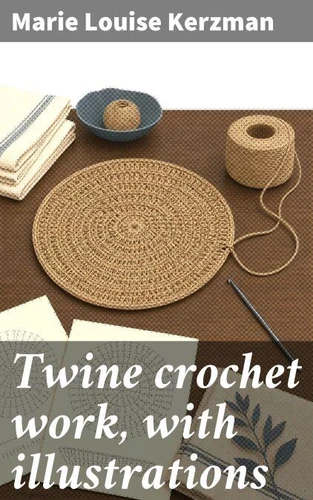
Twine crochet work, with illustrations is a practical yet culturally revealing manual devoted to the decorative and domestic possibilities of crochet executed in twine rather than finer thread. Blending clear instruction with visual guidance, the book likely presents patterns, techniques, and finished models suited to household use, reflecting the late nineteenth- and early twentieth-century enthusiasm for artisanal handiwork.
Its style is direct, didactic, and methodical, but the inclusion of illustrations also places it within a rich tradition of instructional craft publishing that sought to democratize taste, skill, and orderly domestic accomplishment. Although the author is not identified here, the work emerges from a milieu in which needlework manuals were often composed by experienced practitioners, teachers, or editors responding to growing middle-class interest in useful ornament.
Such books were shaped by the Arts and Crafts movement, domestic education, and the period's respect for disciplined manual labor. The author's purpose was likely not merely to teach technique, but to cultivate thrift, creativity, and aesthetic refinement through accessible craft practice. This volume will especially reward readers interested in textile history, domestic arts, and the material culture of everyday life.
It is recommended both as a usable guide for makers and as a valuable historical document illuminating how craft knowledge was transmitted, practiced, and valued.
Its style is direct, didactic, and methodical, but the inclusion of illustrations also places it within a rich tradition of instructional craft publishing that sought to democratize taste, skill, and orderly domestic accomplishment. Although the author is not identified here, the work emerges from a milieu in which needlework manuals were often composed by experienced practitioners, teachers, or editors responding to growing middle-class interest in useful ornament.
Such books were shaped by the Arts and Crafts movement, domestic education, and the period's respect for disciplined manual labor. The author's purpose was likely not merely to teach technique, but to cultivate thrift, creativity, and aesthetic refinement through accessible craft practice. This volume will especially reward readers interested in textile history, domestic arts, and the material culture of everyday life.
It is recommended both as a usable guide for makers and as a valuable historical document illuminating how craft knowledge was transmitted, practiced, and valued.