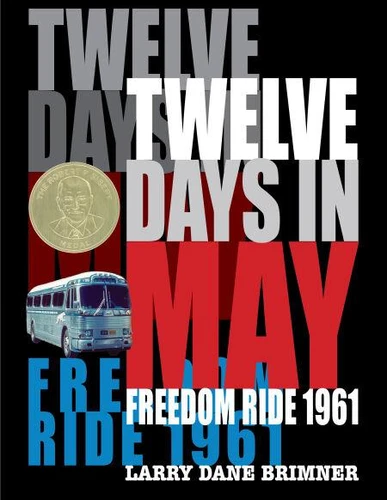
Twelve Days in May. Freedom Ride 1961
Par :Formats :
Disponible dans votre compte client Decitre ou Furet du Nord dès validation de votre commande. Le format ePub protégé est :
- Compatible avec une lecture sur My Vivlio (smartphone, tablette, ordinateur)
- Compatible avec une lecture sur liseuses Vivlio
- Pour les liseuses autres que Vivlio, vous devez utiliser le logiciel Adobe Digital Edition. Non compatible avec la lecture sur les liseuses Kindle, Remarkable et Sony
- Non compatible avec un achat hors France métropolitaine
 , qui est-ce ?
Notre partenaire de plateforme de lecture numérique où vous retrouverez l'ensemble de vos ebooks gratuitement
Pour en savoir plus sur nos ebooks, consultez notre aide en ligne ici
C'est si simple ! Lisez votre ebook avec l'app Vivlio sur votre tablette, mobile ou ordinateur :

- Nombre de pages112
- FormatePub
- ISBN978-1-62979-917-9
- EAN9781629799179
- Date de parution07/11/2017
- Protection num.Adobe DRM
- Taille6 Mo
- Infos supplémentairesepub
- ÉditeurCalkins Creek
Résumé
Robert F. Sibert Informational Book Award Winner"An engaging and accessible account" for young readers about the Freedom Riders who led the landmark 1961 protests against segregation on buses (School Library Journal) On May 4, 1961, a group of thirteen black and white civil rights activists launched the Freedom Ride, aiming to challenge the practice of segregation on buses and at bus terminal facilities in the South.
The Ride would last twelve days. Despite the fact that segregation on buses crossing state lines was ruled unconstitutional by the Supreme Court in 1946, and segregation in interstate transportation facilities was ruled unconstitutional in 1960, these rulings were routinely ignored in the South. The thirteen Freedom Riders intended to test the laws and draw attention to the lack of enforcement with their peaceful protest.
As the Riders traveled deeper into the South, they encountered increasing violence and opposition. Noted civil rights author Larry Dane Brimner relies on archival documents and rarely seen images to tell the riveting story of the little-known first days of the Freedom Ride.
The Ride would last twelve days. Despite the fact that segregation on buses crossing state lines was ruled unconstitutional by the Supreme Court in 1946, and segregation in interstate transportation facilities was ruled unconstitutional in 1960, these rulings were routinely ignored in the South. The thirteen Freedom Riders intended to test the laws and draw attention to the lack of enforcement with their peaceful protest.
As the Riders traveled deeper into the South, they encountered increasing violence and opposition. Noted civil rights author Larry Dane Brimner relies on archival documents and rarely seen images to tell the riveting story of the little-known first days of the Freedom Ride.