
Dr. Sarah Lemmen ist wissenschaftliche Mitarbeiterin am Institut für Geschichtswissenschaft der Universität Bremen, Abt. Kulturgeschichte Ostmitteleuropas mit Schwerpunkt Geschichte der ÄOSSR.
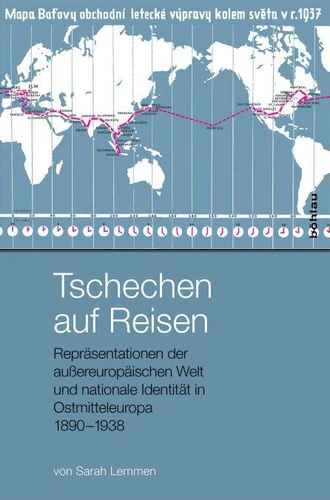
Tschechen auf Reisen. Repräsentationen der außereuropäischen Welt und nationale Identität in Ostmitteleuropa 1890–1938
Par :Formats :
Disponible dans votre compte client Decitre ou Furet du Nord dès validation de votre commande. Le format PDF est :
- Compatible avec une lecture sur My Vivlio (smartphone, tablette, ordinateur)
- Compatible avec une lecture sur liseuses Vivlio
- Pour les liseuses autres que Vivlio, vous devez utiliser le logiciel Adobe Digital Edition. Non compatible avec la lecture sur les liseuses Kindle, Remarkable et Sony
 , qui est-ce ?
Notre partenaire de plateforme de lecture numérique où vous retrouverez l'ensemble de vos ebooks gratuitement
Pour en savoir plus sur nos ebooks, consultez notre aide en ligne ici
C'est si simple ! Lisez votre ebook avec l'app Vivlio sur votre tablette, mobile ou ordinateur :

- Nombre de pages358
- FormatPDF
- ISBN978-3-412-50428-1
- EAN9783412504281
- Date de parution16/04/2018
- Protection num.pas de protection
- Taille7 Mo
- Infos supplémentairespdf
- ÉditeurBöhlau
Résumé
Das Ende des 19. Jahrhunderts sah eine neue europäische Beschäftigung mit außereuropäischen Regionen, die aufgrund der weltweiten Vernetzung durch Eisenbahn und Linienschiff für immer mehr Menschen direkt erfahrbar wurden. Auch im tschechischen Kontext diskutierten Wissenschaftler, Publizisten und Reisende, wie sich die eigene Gesellschaft - und ab 1918 auch der tschechoslowakische Staat - in einer sich globalisierenden Welt zu verorten habe.
Vor allem anhand von Reiseberichten über Afrika, Asien, Australien und Lateinamerika wird hier der tschechische Umgang mit Kolonialismus, Rassismus sowie Globalisierung und schließlich auch eine eigene Form des Reisens "zweiter Klasse" aufgezeigt. Die diesem Buch zugrundeliegende Dissertation wurde mit dem Grete-Mostny-Preis der Universität Wien ausgezeichnet. Towards the end of nineteenth century, across Europe emerged a new interest and engagement with regions beyond Europe.
Along with the vast and rapid expansion of railways and ever new shipping lines, the globe became accessible and tangible around 1900. This was not just true for western Europe but also for central Europeans. From the Czech lands experts, scientists, publicists, travellers, and explorers went out to explore and experience the world. Seeing and exploring the world, a number of Czechs both before and after 1918 sought to locate what it meant to be Czech in a globalising world and to situate Czechness in a global world.
Colonialism, race, racism, and globalisation were among the themes that Czech travellers and explorers discussed in Africa, Asia, and Latin America. Yet as travellers from a "small nation" they also experienced and expressed how it felt to be "second-class travellers". The book was awarded the Grete-Mostny-Prize, University of Vienna.
Vor allem anhand von Reiseberichten über Afrika, Asien, Australien und Lateinamerika wird hier der tschechische Umgang mit Kolonialismus, Rassismus sowie Globalisierung und schließlich auch eine eigene Form des Reisens "zweiter Klasse" aufgezeigt. Die diesem Buch zugrundeliegende Dissertation wurde mit dem Grete-Mostny-Preis der Universität Wien ausgezeichnet. Towards the end of nineteenth century, across Europe emerged a new interest and engagement with regions beyond Europe.
Along with the vast and rapid expansion of railways and ever new shipping lines, the globe became accessible and tangible around 1900. This was not just true for western Europe but also for central Europeans. From the Czech lands experts, scientists, publicists, travellers, and explorers went out to explore and experience the world. Seeing and exploring the world, a number of Czechs both before and after 1918 sought to locate what it meant to be Czech in a globalising world and to situate Czechness in a global world.
Colonialism, race, racism, and globalisation were among the themes that Czech travellers and explorers discussed in Africa, Asia, and Latin America. Yet as travellers from a "small nation" they also experienced and expressed how it felt to be "second-class travellers". The book was awarded the Grete-Mostny-Prize, University of Vienna.