Magacaygu waa Samme Bogad, waxaanna ka shaqeynayay luqadaha muddo dheer. Waxaan khibrad u leeyahay afka Iswiidhishka iyo kan Soomaaliga, waxaana ka mid ah waxyaabaha aan qabtay in aan af Soomaaliga ka dhigay jaamacad. Waxaan arkay baahida loo qabo aalad waxbarasho oo wax ku ool ah, taasoo caawin karta dadka af-soomaaliga ku hadla ee ku nool Iswiidhen. Qaamuuskan waa natiijada dadaalkaas. Waxaan rajeynayaa inuu kaa caawin doono barashada afka Iswiidhishka iyo dhisidda mustaqbal ifa.
Nouveauté
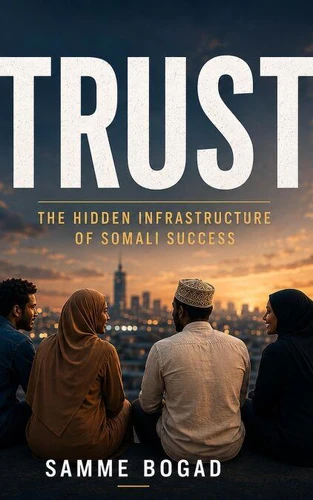
Trust: The Missing Infrastructure
Par :Formats :
Disponible dans votre compte client Decitre ou Furet du Nord dès validation de votre commande. Le format ePub est :
- Compatible avec une lecture sur My Vivlio (smartphone, tablette, ordinateur)
- Compatible avec une lecture sur liseuses Vivlio
- Pour les liseuses autres que Vivlio, vous devez utiliser le logiciel Adobe Digital Edition. Non compatible avec la lecture sur les liseuses Kindle, Remarkable et Sony
 , qui est-ce ?
Notre partenaire de plateforme de lecture numérique où vous retrouverez l'ensemble de vos ebooks gratuitement
Pour en savoir plus sur nos ebooks, consultez notre aide en ligne ici
C'est si simple ! Lisez votre ebook avec l'app Vivlio sur votre tablette, mobile ou ordinateur :

- FormatePub
- ISBN978-91-988610-2-0
- EAN9789198861020
- Date de parution09/08/2026
- Protection num.pas de protection
- Infos supplémentairesepub
- ÉditeurBorderless Africa Books
Résumé
Trust is often treated as a cultural value. Across Somali business and diaspora networks, it also performs economic work. It helps people verify partners, extend credit, coordinate trade, settle transactions, enforce expectations and keep commerce moving across distance. But trust has limits too. It can exclude outsiders, concentrate power, spread reputational harm and leave weaker participants without reliable recourse.
In Trust: The Missing Infrastructure, Samme Bogad draws on documented Somali business cases, diaspora experience, Eastleigh commerce, long-distance trade, remittances, mobile money and emerging digital infrastructure to ask a larger question: what can these systems teach us about building more trustworthy markets?The book introduces practical tools including the Trust Stack, Trust Radius, the Somali Trust Infrastructure Model and the Trust Infrastructure Audit.
It shows how entrepreneurs, fintech builders, investors and policymakers can preserve what relational trust does well while strengthening verification, portability, consumer protection, interoperability and recourse. The future is not trust without institutions. It is institutions worthy of trust.
In Trust: The Missing Infrastructure, Samme Bogad draws on documented Somali business cases, diaspora experience, Eastleigh commerce, long-distance trade, remittances, mobile money and emerging digital infrastructure to ask a larger question: what can these systems teach us about building more trustworthy markets?The book introduces practical tools including the Trust Stack, Trust Radius, the Somali Trust Infrastructure Model and the Trust Infrastructure Audit.
It shows how entrepreneurs, fintech builders, investors and policymakers can preserve what relational trust does well while strengthening verification, portability, consumer protection, interoperability and recourse. The future is not trust without institutions. It is institutions worthy of trust.