
Sebastian Junger is the bestselling author of The Perfect Storm and A Death in Belmont. He is a contributing editor to Vanity Fair, and has been awarded a National Magazine Award and an SAIS Novartis Prize for journalism. He lives in New York.
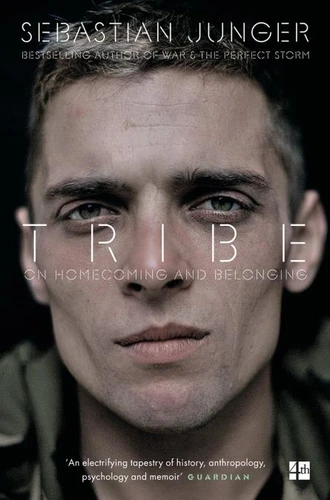
Tribe. On Homecoming and Belonging
Par :Formats :
Disponible dans votre compte client Decitre ou Furet du Nord dès validation de votre commande. Le format ePub protégé est :
- Compatible avec une lecture sur My Vivlio (smartphone, tablette, ordinateur)
- Compatible avec une lecture sur liseuses Vivlio
- Pour les liseuses autres que Vivlio, vous devez utiliser le logiciel Adobe Digital Edition. Non compatible avec la lecture sur les liseuses Kindle, Remarkable et Sony
- Non compatible avec un achat hors France métropolitaine
 , qui est-ce ?
Notre partenaire de plateforme de lecture numérique où vous retrouverez l'ensemble de vos ebooks gratuitement
Pour en savoir plus sur nos ebooks, consultez notre aide en ligne ici
C'est si simple ! Lisez votre ebook avec l'app Vivlio sur votre tablette, mobile ou ordinateur :

- Nombre de pages192
- FormatePub
- ISBN978-0-00-816819-3
- EAN9780008168193
- Date de parution16/06/2016
- Protection num.Adobe DRM
- Infos supplémentairesepub
- ÉditeurFourth Estate
Résumé
From the author of THE PERFECT STORM and WAR comes a book about why men miss war, why Londoners missed the Blitz, and what we can all learn from American Indian captives who refused to go home.
Tribe is a look at post-traumatic stress disorder and the challenges veterans face returning to society. Using his background in anthropology, Sebastian Junger argues that the problem lies not with vets or with the trauma they've suffered, but with the society to which they are trying to return.
One of the most puzzling things about veterans who experience PTSD is that the majority never even saw combat-and yet they feel deeply alienated and out of place back home.
The reason may lie in our natural inclination, as a species, to live in groups of thirty to fifty people who are entirely reliant on one another for safety, comfort and a sense of meaning: in short, the life of a soldier. It is one of the ironies of the modern age that as affluence rises in a society, so do rates of suicide, depression and of course PTSD. In a wealthy society people don't need to cooperate with one another, so they often lead much lonelier lives that lead to psychological distress.
There is a way for modern society to reverse this trend, however, and studying how veterans react to coming home may provide a clue to how to do it. But it won't be easy.
The reason may lie in our natural inclination, as a species, to live in groups of thirty to fifty people who are entirely reliant on one another for safety, comfort and a sense of meaning: in short, the life of a soldier. It is one of the ironies of the modern age that as affluence rises in a society, so do rates of suicide, depression and of course PTSD. In a wealthy society people don't need to cooperate with one another, so they often lead much lonelier lives that lead to psychological distress.
There is a way for modern society to reverse this trend, however, and studying how veterans react to coming home may provide a clue to how to do it. But it won't be easy.
A propos de Sebastian Junger

3,87 €

Freedom
E-book
6,29 €

La Tempête
E-book
16,99 €

15,99 €

A Death in Belmont
E-book
16,09 €


War
E-book
6,99 €

10,31 €