SOLDES
Jusqu'à -70% sur une sélection d'articles*

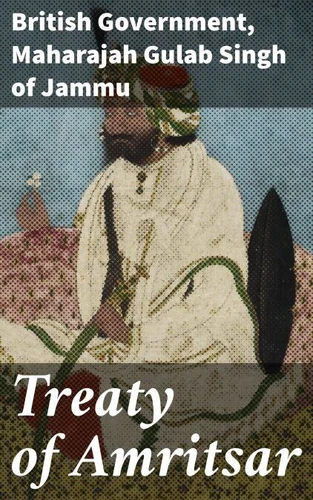
Treaty of Amritsar. Diplomatic Intrigues and Territorial Shifts: Unraveling the Legacy of the Anglo-Sikh Treaty
Par : ,Formats :
Disponible dans votre compte client Decitre ou Furet du Nord dès validation de votre commande. Le format ePub est :
- Compatible avec une lecture sur My Vivlio (smartphone, tablette, ordinateur)
- Compatible avec une lecture sur liseuses Vivlio
- Pour les liseuses autres que Vivlio, vous devez utiliser le logiciel Adobe Digital Edition. Non compatible avec la lecture sur les liseuses Kindle, Remarkable et Sony
 , qui est-ce ?
Notre partenaire de plateforme de lecture numérique où vous retrouverez l'ensemble de vos ebooks gratuitement
Pour en savoir plus sur nos ebooks, consultez notre aide en ligne ici
C'est si simple ! Lisez votre ebook avec l'app Vivlio sur votre tablette, mobile ou ordinateur :

- Nombre de pages76
- FormatePub
- ISBN406-4-06-643204-1
- EAN4064066432041
- Date de parution08/12/2020
- Protection num.Digital Watermarking
- Taille657 Ko
- Infos supplémentairesepub
- ÉditeurGOOD PRESS
Résumé
The "Treaty of Amritsar" anthology offers a profound exploration of imperial dynamics and sovereignty in the mid-19th century India, presented through a remarkable intersection of official narratives, political correspondence, and detailed treaty documentation. This collection situates itself in the rich tapestry of colonial and regional history, reflecting the complex relationship between the British Empire and the princely state of Jammu and Kashmir.
The anthology includes a diverse range of literary forms, from the formal rigidity of treaties to the softer reflections found in political memoranda and analyses. Collectively, these documents serve as a lens through which the shifting power structures and the geopolitical significance of the treaty can be understood. The contributing authors to this anthology, particularly the British Government and Maharajah Gulab Singh, offer unique perspectives shaped by their distinct roles and interests.
As an embodiment of 19th-century political maneuvering, the anthology provides invaluable insights into the historical and cultural contexts of colonial India. These varied voices highlight the tensions and negotiations that characterized the relationship between colonial powers and regional rulers, offering a rich commentary on the era's political landscape. The editors have successfully curated a collection that aligns with broader historical and literary movements that emphasize post-colonial critiques and historical re-evaluation.
This anthology not only serves as a critical resource for historians and scholars of colonial studies but is also a compelling read for anyone interested in the intricate web of historical relations. It provides a unique opportunity to engage with a multiplicity of perspectives, drawing readers into a dialogue that traverses boundaries of time, culture, and power. By engaging with the "Treaty of Amritsar, " readers are invited to deepen their understanding of the historical narratives and political discourses that shaped an important era, fostering a broader appreciation for the complexities of historical documentation and imperial legacies.
The anthology includes a diverse range of literary forms, from the formal rigidity of treaties to the softer reflections found in political memoranda and analyses. Collectively, these documents serve as a lens through which the shifting power structures and the geopolitical significance of the treaty can be understood. The contributing authors to this anthology, particularly the British Government and Maharajah Gulab Singh, offer unique perspectives shaped by their distinct roles and interests.
As an embodiment of 19th-century political maneuvering, the anthology provides invaluable insights into the historical and cultural contexts of colonial India. These varied voices highlight the tensions and negotiations that characterized the relationship between colonial powers and regional rulers, offering a rich commentary on the era's political landscape. The editors have successfully curated a collection that aligns with broader historical and literary movements that emphasize post-colonial critiques and historical re-evaluation.
This anthology not only serves as a critical resource for historians and scholars of colonial studies but is also a compelling read for anyone interested in the intricate web of historical relations. It provides a unique opportunity to engage with a multiplicity of perspectives, drawing readers into a dialogue that traverses boundaries of time, culture, and power. By engaging with the "Treaty of Amritsar, " readers are invited to deepen their understanding of the historical narratives and political discourses that shaped an important era, fostering a broader appreciation for the complexities of historical documentation and imperial legacies.