SOLDES
Jusqu'à -70% sur une sélection d'articles*

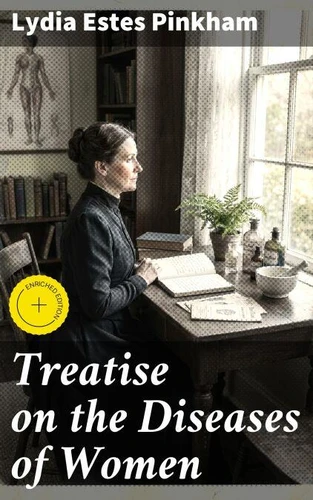
Treatise on the Diseases of Women. Enriched edition. Empowering Women Through Health Education and Holistic Remedies
Par : ,Formats :
Disponible dans votre compte client Decitre ou Furet du Nord dès validation de votre commande. Le format ePub est :
- Compatible avec une lecture sur My Vivlio (smartphone, tablette, ordinateur)
- Compatible avec une lecture sur liseuses Vivlio
- Pour les liseuses autres que Vivlio, vous devez utiliser le logiciel Adobe Digital Edition. Non compatible avec la lecture sur les liseuses Kindle, Remarkable et Sony
 , qui est-ce ?
Notre partenaire de plateforme de lecture numérique où vous retrouverez l'ensemble de vos ebooks gratuitement
Pour en savoir plus sur nos ebooks, consultez notre aide en ligne ici
C'est si simple ! Lisez votre ebook avec l'app Vivlio sur votre tablette, mobile ou ordinateur :

- Nombre de pages842
- FormatePub
- ISBN4057664596888
- EAN4057664596888
- Date de parution25/04/2021
- Protection num.Digital Watermarking
- Taille2 Mo
- Infos supplémentairesepub
- ÉditeurGOOD PRESS
Résumé
In "Treatise on the Diseases of Women, " Lydia Estes Pinkham presents a pioneering examination of women's health that blends personal experience with medical knowledge, reflecting a growing Victorian interest in women's issues. Her candid discussions on topics often considered taboo'Äîsuch as menstruation, pregnancy, and reproductive health'Äîare grounded in a compassionate and accessible literary style, employing plain language to connect with her readers.
As an early advocate for women's health, Pinkham's treatise emerged amid a context where the medical field was predominantly controlled by men, paving the way for a more inclusive and sensitive approach to women's health concerns. Lydia Estes Pinkham, a prominent figure in the 19th century, was not only a self-made businesswoman but also paved her way through societal constraints, notably through her herbal remedies aimed at alleviating women's ailments.
Her personal struggles and the trials faced by women of her time compelled her to address the overlooked aspects of female health. Pinkham harnessed her own experiences and societal observations to inform her work, which has persisted as a significant contribution to women's health literature. This treatise stands as an essential resource for both scholars studying the evolution of women's health and general readers interested in the historical progression of medical understanding.
Pinkham's voice resonates with authenticity and urgency, making this work a vital read for those seeking insights into the intersections of gender, health, and societal norms. In this enriched edition, we have carefully created added value for your reading experience: - A succinct Introduction situates the work's timeless appeal and themes. - The Synopsis outlines the central plot, highlighting key developments without spoiling critical twists. - A detailed Historical Context immerses you in the era's events and influences that shaped the writing. - A thorough Analysis dissects symbols, motifs, and character arcs to unearth underlying meanings. - Reflection questions prompt you to engage personally with the work's messages, connecting them to modern life. - Hand-picked Memorable Quotes shine a spotlight on moments of literary brilliance. - Interactive footnotes clarify unusual references, historical allusions, and archaic phrases for an effortless, more informed read.
As an early advocate for women's health, Pinkham's treatise emerged amid a context where the medical field was predominantly controlled by men, paving the way for a more inclusive and sensitive approach to women's health concerns. Lydia Estes Pinkham, a prominent figure in the 19th century, was not only a self-made businesswoman but also paved her way through societal constraints, notably through her herbal remedies aimed at alleviating women's ailments.
Her personal struggles and the trials faced by women of her time compelled her to address the overlooked aspects of female health. Pinkham harnessed her own experiences and societal observations to inform her work, which has persisted as a significant contribution to women's health literature. This treatise stands as an essential resource for both scholars studying the evolution of women's health and general readers interested in the historical progression of medical understanding.
Pinkham's voice resonates with authenticity and urgency, making this work a vital read for those seeking insights into the intersections of gender, health, and societal norms. In this enriched edition, we have carefully created added value for your reading experience: - A succinct Introduction situates the work's timeless appeal and themes. - The Synopsis outlines the central plot, highlighting key developments without spoiling critical twists. - A detailed Historical Context immerses you in the era's events and influences that shaped the writing. - A thorough Analysis dissects symbols, motifs, and character arcs to unearth underlying meanings. - Reflection questions prompt you to engage personally with the work's messages, connecting them to modern life. - Hand-picked Memorable Quotes shine a spotlight on moments of literary brilliance. - Interactive footnotes clarify unusual references, historical allusions, and archaic phrases for an effortless, more informed read.