SOLDES
Jusqu'à -70% sur une sélection d'articles*

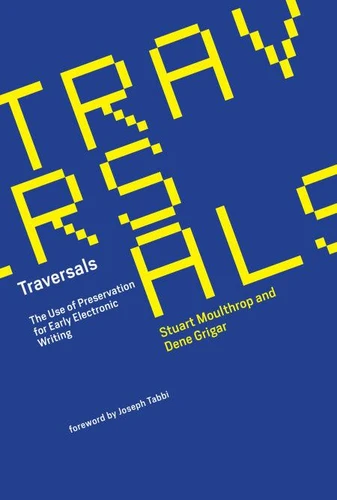
Traversals. The Use of Preservation for Early Electronic Writing
Par : , ,Formats :
Disponible dans votre compte client Decitre ou Furet du Nord dès validation de votre commande. Le format ePub protégé est :
- Compatible avec une lecture sur My Vivlio (smartphone, tablette, ordinateur)
- Compatible avec une lecture sur liseuses Vivlio
- Pour les liseuses autres que Vivlio, vous devez utiliser le logiciel Adobe Digital Edition. Non compatible avec la lecture sur les liseuses Kindle, Remarkable et Sony
- Non compatible avec un achat hors France métropolitaine
 , qui est-ce ?
Notre partenaire de plateforme de lecture numérique où vous retrouverez l'ensemble de vos ebooks gratuitement
Pour en savoir plus sur nos ebooks, consultez notre aide en ligne ici
C'est si simple ! Lisez votre ebook avec l'app Vivlio sur votre tablette, mobile ou ordinateur :

- Nombre de pages296
- FormatePub
- ISBN978-0-262-33902-5
- EAN9780262339025
- Date de parution31/03/2017
- Protection num.Adobe DRM
- Taille3 Mo
- Infos supplémentairesepub
- ÉditeurThe MIT Press
Résumé
An exercise in reclaiming electronic literary works on inaccessible platforms, examining four works as both artifacts and operations. Many pioneering works of electronic literature are now largely inaccessible because of changes in hardware, software, and platforms. The virtual disappearance of these works-created on floppy disks, in Apple's defunct HyperCard, and on other early systems and platforms-not only puts important electronic literary work out of reach but also signals the fragility of most works of culture in the digital age.
In response, Dene Grigar and Stuart Moulthrop have been working to document and preserve electronic literature, work that has culminated in the Pathfinders project and its series of "Traversals"-video and audio recordings of demonstrations performed on historically appropriate platforms, with participation and commentary by the authors of the works. In Traversals, Moulthrop and Grigar mine this material to examine four influential early works: Judy Malloy's Uncle Roger (1986), John McDaid's Uncle Buddy's Phantom Funhouse (1993), Shelley Jackson's Patchwork Girl (1995) and Bill Bly's We Descend (1997), offering "deep readings" that consider the works as both literary artifacts and computational constructs.
For each work, Moulthrop and Grigar explore the interplay between the text's material circumstances and the patterns of meaning it engages and creates, paying attention both to specificities of media and purposes of expression.
In response, Dene Grigar and Stuart Moulthrop have been working to document and preserve electronic literature, work that has culminated in the Pathfinders project and its series of "Traversals"-video and audio recordings of demonstrations performed on historically appropriate platforms, with participation and commentary by the authors of the works. In Traversals, Moulthrop and Grigar mine this material to examine four influential early works: Judy Malloy's Uncle Roger (1986), John McDaid's Uncle Buddy's Phantom Funhouse (1993), Shelley Jackson's Patchwork Girl (1995) and Bill Bly's We Descend (1997), offering "deep readings" that consider the works as both literary artifacts and computational constructs.
For each work, Moulthrop and Grigar explore the interplay between the text's material circumstances and the patterns of meaning it engages and creates, paying attention both to specificities of media and purposes of expression.