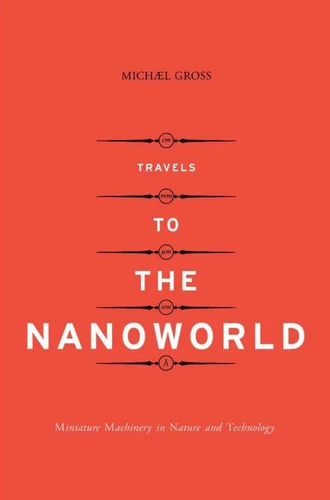
Travels To The Nanoworld
Par :Formats :
Disponible dans votre compte client Decitre ou Furet du Nord dès validation de votre commande. Le format ePub protégé est :
- Compatible avec une lecture sur My Vivlio (smartphone, tablette, ordinateur)
- Compatible avec une lecture sur liseuses Vivlio
- Pour les liseuses autres que Vivlio, vous devez utiliser le logiciel Adobe Digital Edition. Non compatible avec la lecture sur les liseuses Kindle, Remarkable et Sony
- Non compatible avec un achat hors France métropolitaine
 , qui est-ce ?
Notre partenaire de plateforme de lecture numérique où vous retrouverez l'ensemble de vos ebooks gratuitement
Pour en savoir plus sur nos ebooks, consultez notre aide en ligne ici
C'est si simple ! Lisez votre ebook avec l'app Vivlio sur votre tablette, mobile ou ordinateur :

- Nombre de pages268
- FormatePub
- ISBN978-0-465-01155-1
- EAN9780465011551
- Date de parution03/01/2008
- Protection num.Adobe DRM
- Infos supplémentairesepub
- ÉditeurBasic Books
Résumé
Our lives are about to be changed by new technologies that operate on a scale too small to be seen by even the most powerful optical microscopes. Devices measured in nanometers-billionths of a meter-have set off a nanotechnology revolution. In Travels to the Nanoworld, Michael Gross takes us deep into this miniature universe and describes natural processes and new technologies that will make modern machines look like relics from the Stone Age.
Starting with the model of the living cell, whose vital processes are directed and carried out by structures with dimensions on the nanometer scale, Gross shows how biochemists are beginning to understand the mechanisms of the "nanotechnology of nature." Soon science will have the knowledge and technology to generate artificial systems that will perform similar tasks, and through them will find new treatments for disease, substitutes for toxic waste, and alternatives to carbon fuel.
Starting with the model of the living cell, whose vital processes are directed and carried out by structures with dimensions on the nanometer scale, Gross shows how biochemists are beginning to understand the mechanisms of the "nanotechnology of nature." Soon science will have the knowledge and technology to generate artificial systems that will perform similar tasks, and through them will find new treatments for disease, substitutes for toxic waste, and alternatives to carbon fuel.