
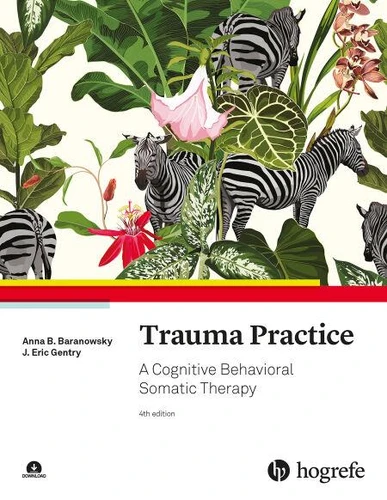
Trauma Practice. A Cognitive Behavioral Somatic Therapy
Par : ,Formats :
Disponible dans votre compte client Decitre ou Furet du Nord dès validation de votre commande. Le format ePub est :
- Compatible avec une lecture sur My Vivlio (smartphone, tablette, ordinateur)
- Compatible avec une lecture sur liseuses Vivlio
- Pour les liseuses autres que Vivlio, vous devez utiliser le logiciel Adobe Digital Edition. Non compatible avec la lecture sur les liseuses Kindle, Remarkable et Sony
 , qui est-ce ?
Notre partenaire de plateforme de lecture numérique où vous retrouverez l'ensemble de vos ebooks gratuitement
Pour en savoir plus sur nos ebooks, consultez notre aide en ligne ici
C'est si simple ! Lisez votre ebook avec l'app Vivlio sur votre tablette, mobile ou ordinateur :

- Nombre de pages228
- FormatePub
- ISBN978-1-61334-592-4
- EAN9781613345924
- Date de parution08/05/2023
- Protection num.Digital Watermarking
- Taille14 Mo
- Infos supplémentairesepub
- ÉditeurHogrefe Publishing
Résumé
New edition of this effective toolbox for treating trauma survivors is even more comprehensive
This popular, practical resource for clinicians caring for trauma survivors has been fully updated and expanded. It remains a key toolkit of cognitive behavioral somatic therapy (CBST) techniques for clinicians who want to enhance their skills in treating trauma. Baranowsky and Gentry help practitioners find the right tools to guide trauma survivors toward growth and healing.
Reinforcing this powerful intervention is the addition of a deeper emphasis on the preparatory phase for therapists, including the therapists' own ability to self-regulate their autonomic system during client encounters. Throughout the acclaimed book, an effective tri-phasic model for trauma treatment is constructed (safety and stabilization; working through trauma; reconnection with a meaningful life) as guiding principle, enabling a phased delivery that is fitted to the survivor's relational and processing style.
The authors present, clearly and in detail, an array of techniques, protocols, and interventions for treating trauma survivors (cognitive, behavioral, somatic, and emotional/relational). These include popular and effective CBST techniques, approaches inspired by research on neuroplasticity, and interventions informed by polyvagal theory. Many techniques include links to video or audio material demonstrating how to carry-out the intervention.
Further sections are devoted to forward-facing trauma therapy, a safe, effective, and accelerated method of treating trauma, and to clinician self-care. Over 40 video and audio demonstrations of many of the techniques are available for download. There are also 36 handouts for clients that can be downloaded and printed for clinical use.
Reinforcing this powerful intervention is the addition of a deeper emphasis on the preparatory phase for therapists, including the therapists' own ability to self-regulate their autonomic system during client encounters. Throughout the acclaimed book, an effective tri-phasic model for trauma treatment is constructed (safety and stabilization; working through trauma; reconnection with a meaningful life) as guiding principle, enabling a phased delivery that is fitted to the survivor's relational and processing style.
The authors present, clearly and in detail, an array of techniques, protocols, and interventions for treating trauma survivors (cognitive, behavioral, somatic, and emotional/relational). These include popular and effective CBST techniques, approaches inspired by research on neuroplasticity, and interventions informed by polyvagal theory. Many techniques include links to video or audio material demonstrating how to carry-out the intervention.
Further sections are devoted to forward-facing trauma therapy, a safe, effective, and accelerated method of treating trauma, and to clinician self-care. Over 40 video and audio demonstrations of many of the techniques are available for download. There are also 36 handouts for clients that can be downloaded and printed for clinical use.