SOLDES
Jusqu'à -70% sur une sélection d'articles*

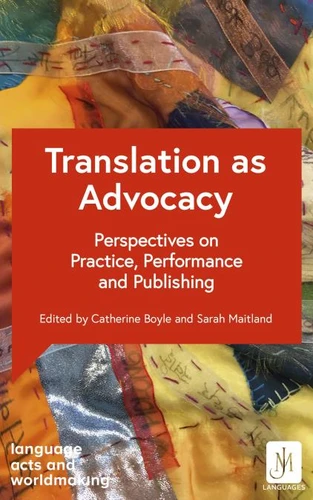
Translation as Advocacy. Perspectives on Practice, Performance and Publishing
Par :Formats :
Disponible dans votre compte client Decitre ou Furet du Nord dès validation de votre commande. Le format ePub protégé est :
- Compatible avec une lecture sur My Vivlio (smartphone, tablette, ordinateur)
- Compatible avec une lecture sur liseuses Vivlio
- Pour les liseuses autres que Vivlio, vous devez utiliser le logiciel Adobe Digital Edition. Non compatible avec la lecture sur les liseuses Kindle, Remarkable et Sony
- Non compatible avec un achat hors France métropolitaine
 , qui est-ce ?
Notre partenaire de plateforme de lecture numérique où vous retrouverez l'ensemble de vos ebooks gratuitement
Pour en savoir plus sur nos ebooks, consultez notre aide en ligne ici
C'est si simple ! Lisez votre ebook avec l'app Vivlio sur votre tablette, mobile ou ordinateur :

- Nombre de pages208
- FormatePub
- ISBN978-1-3998-1615-1
- EAN9781399816151
- Date de parution25/04/2024
- Protection num.Adobe DRM
- Infos supplémentairesepub
- ÉditeurJohn Murray Languages
Résumé
What does it mean to advocate - in translation, for translation, through translation? What does advocacy look like, for those who do the translating or for those whose work is translated? To what extent is translation itself a form of advocacy? These 'what' questions are the driving force behind this collection. Translation as Advocacy highlights the innovative ways in which translator-academics in seven different fields discuss their practice in relation to their understanding of advocacy.
The book aims to encourage people to think about translators as active agents bringing new work into the receiving culture, advocating for the writers they translate, for ideas, for practices. As such, the book asserts that the act of translation is a mode of cultural production and a political intervention through which the translator, as advocate, claims a significant position in intercultural dialogue.
Featuring seven interrelated chapters, the book covers themes of judgement, spaces for translation, classroom practice, collaboration, intercultural position, textuality, and voice. Each chapter explores the specific demands of different types of translation work, the specific role of each stage of the process and what advocacy means at each of these stages, for example: choosing what is translated; mediating between author and receiving culture; pitching to publishers; social interactions; framing the translation for different audiences; teaching; creating new canons; gatekeepers and prizes; dissemination; marketing and reception.
This book repositions the role of the translator-academic as an activist who uses their knowledge and understanding to bring agency to the complex processes of understanding across time and space. Moving critically through the different stages that the translator-academic occupies, using the spaces for research, performance and classroom teaching as springboards for active engagement with the key preoccupations of our times, this book will highlight translation as advocacy for students, educators, audiences for translation and the translation industry.
Like all the volumes in the Language Acts and Worldmaking series, the overall aim is two-fold: to challenge widely-held views about language learning as a neutral instrument of globalisation and to innovate and transform language research, teaching and learning, together with Modern Languages as an academic discipline, by foregrounding its unique form of cognition and critical engagement. Specific aims are to:· propose new ways of bridging the gaps between those who teach and research languages and those who learn and use them in everyday contexts from the professional to the personal· put research into the hands of wider audiences· share a philosophy, policy and practice of language teaching and learning which turns research into action· provide the research, experience and data to enable informed debates on current issues and attitudes in language learning, teaching and research· share knowledge across and within all levels and experiences of language learning and teaching· showcase exciting new work that derives from different types of community activity and is of practical relevance to its audiences· disseminate new research in languages that engages with diverse communities of language practitioners.
The book aims to encourage people to think about translators as active agents bringing new work into the receiving culture, advocating for the writers they translate, for ideas, for practices. As such, the book asserts that the act of translation is a mode of cultural production and a political intervention through which the translator, as advocate, claims a significant position in intercultural dialogue.
Featuring seven interrelated chapters, the book covers themes of judgement, spaces for translation, classroom practice, collaboration, intercultural position, textuality, and voice. Each chapter explores the specific demands of different types of translation work, the specific role of each stage of the process and what advocacy means at each of these stages, for example: choosing what is translated; mediating between author and receiving culture; pitching to publishers; social interactions; framing the translation for different audiences; teaching; creating new canons; gatekeepers and prizes; dissemination; marketing and reception.
This book repositions the role of the translator-academic as an activist who uses their knowledge and understanding to bring agency to the complex processes of understanding across time and space. Moving critically through the different stages that the translator-academic occupies, using the spaces for research, performance and classroom teaching as springboards for active engagement with the key preoccupations of our times, this book will highlight translation as advocacy for students, educators, audiences for translation and the translation industry.
Like all the volumes in the Language Acts and Worldmaking series, the overall aim is two-fold: to challenge widely-held views about language learning as a neutral instrument of globalisation and to innovate and transform language research, teaching and learning, together with Modern Languages as an academic discipline, by foregrounding its unique form of cognition and critical engagement. Specific aims are to:· propose new ways of bridging the gaps between those who teach and research languages and those who learn and use them in everyday contexts from the professional to the personal· put research into the hands of wider audiences· share a philosophy, policy and practice of language teaching and learning which turns research into action· provide the research, experience and data to enable informed debates on current issues and attitudes in language learning, teaching and research· share knowledge across and within all levels and experiences of language learning and teaching· showcase exciting new work that derives from different types of community activity and is of practical relevance to its audiences· disseminate new research in languages that engages with diverse communities of language practitioners.
A propos de Various


13 little love stories
E-book
9,99 €

19,61 €


0,99 €

Hello Darkness #22
E-book
4,90 €

The Buddha Way
E-book
2,93 €

Stoic Secrets
E-book
2,93 €

3,49 €


4,49 €

Hello Darkness #21
E-book
5,88 €

Hello Body Horror #1
E-book
5,88 €

Lumberjanes Book Four
E-book
19,61 €

Hello Darkness #20
E-book
5,88 €

50,03 €