SOLDES
Jusqu'à -70% sur une sélection d'articles*

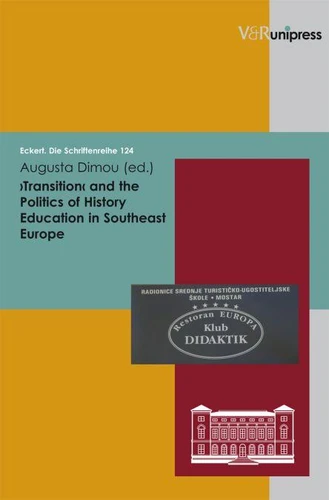
›Transition‹ and the Politics of History Education in Southeast Europe. . E-BOOK
Par : ,Formats :
Disponible dans votre compte client Decitre ou Furet du Nord dès validation de votre commande. Le format PDF est :
- Compatible avec une lecture sur My Vivlio (smartphone, tablette, ordinateur)
- Compatible avec une lecture sur liseuses Vivlio
- Pour les liseuses autres que Vivlio, vous devez utiliser le logiciel Adobe Digital Edition. Non compatible avec la lecture sur les liseuses Kindle, Remarkable et Sony
 , qui est-ce ?
Notre partenaire de plateforme de lecture numérique où vous retrouverez l'ensemble de vos ebooks gratuitement
Pour en savoir plus sur nos ebooks, consultez notre aide en ligne ici
C'est si simple ! Lisez votre ebook avec l'app Vivlio sur votre tablette, mobile ou ordinateur :

- Nombre de pages402
- FormatPDF
- ISBN978-3-86234-066-8
- EAN9783862340668
- Date de parution07/10/2009
- Protection num.pas de protection
- Taille2 Mo
- Infos supplémentairespdf
- ÉditeurV&R Unipress
Résumé
This collection of essays gives an overview on current developments in the field of education in the successor states of ex-Yugoslavia and the Republic of Moldova from the mid 1990s to today. The impact of nation- and state-building processes on the politics of history and on schooling are analysed against the background of the complex social and political transformations that have been taking place in the region; changes that are usually subsumed under the problematic and rather unspecific notion of »transition« .
The book engages in such issues like: What is the role of international actors and which impact have interventions in education? What are the preconditions for lasting and sustainable reforms in education? What goals are inscribed in history textbook narratives? The book addresses these questions from an interdisciplinary perspective and offers insights into the complicated and ambiguous developments in the field of education in Southeast Europe during the last decade.
The book engages in such issues like: What is the role of international actors and which impact have interventions in education? What are the preconditions for lasting and sustainable reforms in education? What goals are inscribed in history textbook narratives? The book addresses these questions from an interdisciplinary perspective and offers insights into the complicated and ambiguous developments in the field of education in Southeast Europe during the last decade.