
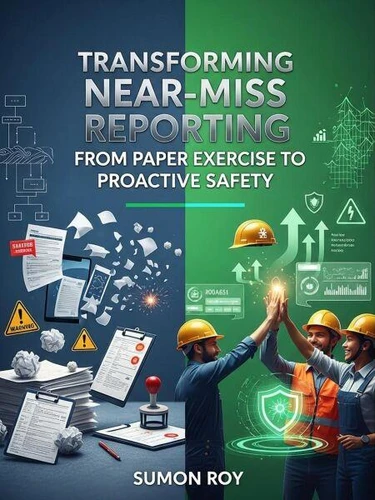
Transforming Near-Miss Reporting from Paper Exercise to Proactive Safety
Par :Formats :
Disponible dans votre compte client Decitre ou Furet du Nord dès validation de votre commande. Le format ePub protégé est :
- Compatible avec une lecture sur My Vivlio (smartphone, tablette, ordinateur)
- Compatible avec une lecture sur liseuses Vivlio
- Pour les liseuses autres que Vivlio, vous devez utiliser le logiciel Adobe Digital Edition. Non compatible avec la lecture sur les liseuses Kindle, Remarkable et Sony
- Non compatible avec un achat hors France métropolitaine
 , qui est-ce ?
Notre partenaire de plateforme de lecture numérique où vous retrouverez l'ensemble de vos ebooks gratuitement
Pour en savoir plus sur nos ebooks, consultez notre aide en ligne ici
C'est si simple ! Lisez votre ebook avec l'app Vivlio sur votre tablette, mobile ou ordinateur :

- FormatePub
- ISBN8232902254
- EAN9798232902254
- Date de parution13/12/2025
- Protection num.Adobe DRM
- Infos supplémentairesepub
- ÉditeurDraft2Digital
Résumé
Transforming Near-Miss Reporting from Paper Exercise to Proactive Safety by Sumon Roy delivers a clear, practical framework for turning near-miss reporting into a proactive safety engine. Drawing from real-world safety management practices, the book shows organizations how to convert scattered incident data into a structured, searchable, and highly usable lessons-learned repository that strengthens safety culture, supports decision-making, and prevents repeat incidents.
Roy explains how a well-designed repository-organized by incident type, equipment, location, hazards, corrective actions, and safety-management elements-enables fast access to relevant historical insights. This categorization empowers teams to perform meaningful trend analysis, uncover systemic risks, and move beyond compliance-based reporting. The book emphasizes data quality and usability, detailing the essential components of an effective lessons-learned entry: incident description, root causes, lessons learned, corrective and preventive actions, follow-up effectiveness, and links to procedures or training materials.
With this approach, organizations can transform raw event records into a living knowledge resource that drives continuous improvement. Clear, actionable, and grounded in industry practice, this guide is ideal for safety professionals, supervisors, managers, and leaders seeking to build smarter, more proactive workplaces.
Roy explains how a well-designed repository-organized by incident type, equipment, location, hazards, corrective actions, and safety-management elements-enables fast access to relevant historical insights. This categorization empowers teams to perform meaningful trend analysis, uncover systemic risks, and move beyond compliance-based reporting. The book emphasizes data quality and usability, detailing the essential components of an effective lessons-learned entry: incident description, root causes, lessons learned, corrective and preventive actions, follow-up effectiveness, and links to procedures or training materials.
With this approach, organizations can transform raw event records into a living knowledge resource that drives continuous improvement. Clear, actionable, and grounded in industry practice, this guide is ideal for safety professionals, supervisors, managers, and leaders seeking to build smarter, more proactive workplaces.
A propos de Sumon Roy

21,49 €

Building Global Fortune
E-book
12,99 €

A Crime of Passion
E-book
12,99 €

12,49 €

The Fathers I Knew
E-book
12,99 €
The Silent Witness
E-book
14,99 €

The Gilded Cage
E-book
15,99 €

Promise for Dottie
E-book
12,99 €

Cracks in the Pavement
E-book
12,99 €


9,49 €

11,49 €