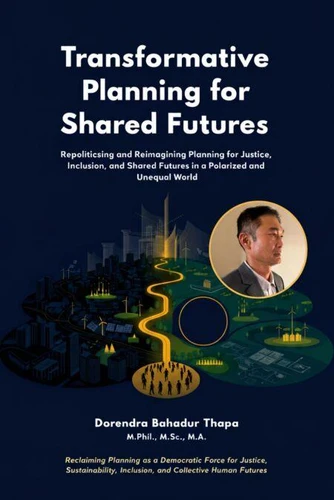
Transformative Planning for Shared FuturesIn an era of deepening inequality, climate crisis, and democratic erosion, planning can no longer remain a neutral technical exercise. Transformative Planning for Shared Futures offers a bold reconceptualization of planning as a democratic, political, and ethical practice capable of shaping just and sustainable societies. Moving beyond technocratic management and market-driven development, this book provides a comprehensive framework for repoliticizing planning to address urgent global challenges-from rapid urbanization and digital disruption to ecological degradation and social polarization.
Drawing on interdisciplinary insights from governance studies, sustainability science, urban theory, and political economy, it explores how planning systems can evolve from control-oriented administration toward participatory co-creation. Through critical analysis, global case examples, and practical frameworks, the book examines ten interconnected dimensions: spatial justice, climate resilience, inclusive participation, digital governance, economic transformation, institutional reform, and futures thinking.
It argues that transformative planning requires not only better tools but also ethical leadership, systems thinking, and collective imagination. Essential reading for planners, policymakers, researchers, students, and engaged citizens, this volume invites readers to reclaim planning as a shared human responsibility-building inclusive, resilient, and humane futures for people and the planet.
Transformative Planning for Shared FuturesIn an era of deepening inequality, climate crisis, and democratic erosion, planning can no longer remain a neutral technical exercise. Transformative Planning for Shared Futures offers a bold reconceptualization of planning as a democratic, political, and ethical practice capable of shaping just and sustainable societies. Moving beyond technocratic management and market-driven development, this book provides a comprehensive framework for repoliticizing planning to address urgent global challenges-from rapid urbanization and digital disruption to ecological degradation and social polarization.
Drawing on interdisciplinary insights from governance studies, sustainability science, urban theory, and political economy, it explores how planning systems can evolve from control-oriented administration toward participatory co-creation. Through critical analysis, global case examples, and practical frameworks, the book examines ten interconnected dimensions: spatial justice, climate resilience, inclusive participation, digital governance, economic transformation, institutional reform, and futures thinking.
It argues that transformative planning requires not only better tools but also ethical leadership, systems thinking, and collective imagination. Essential reading for planners, policymakers, researchers, students, and engaged citizens, this volume invites readers to reclaim planning as a shared human responsibility-building inclusive, resilient, and humane futures for people and the planet.


 , qui est-ce ?