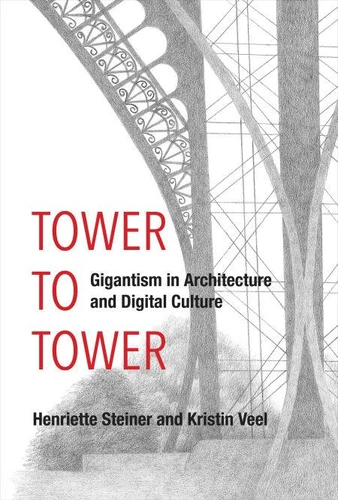
Tower to Tower. Gigantism in Architecture and Digital Culture
Par : ,Formats :
Disponible dans votre compte client Decitre ou Furet du Nord dès validation de votre commande. Le format ePub protégé est :
- Compatible avec une lecture sur My Vivlio (smartphone, tablette, ordinateur)
- Compatible avec une lecture sur liseuses Vivlio
- Pour les liseuses autres que Vivlio, vous devez utiliser le logiciel Adobe Digital Edition. Non compatible avec la lecture sur les liseuses Kindle, Remarkable et Sony
- Non compatible avec un achat hors France métropolitaine
 , qui est-ce ?
Notre partenaire de plateforme de lecture numérique où vous retrouverez l'ensemble de vos ebooks gratuitement
Pour en savoir plus sur nos ebooks, consultez notre aide en ligne ici
C'est si simple ! Lisez votre ebook avec l'app Vivlio sur votre tablette, mobile ou ordinateur :

- Nombre de pages248
- FormatePub
- ISBN978-0-262-35834-7
- EAN9780262358347
- Date de parution12/05/2020
- Protection num.Adobe DRM
- Taille11 Mo
- Infos supplémentairesepub
- ÉditeurThe MIT Press
Résumé
A cultural history of gigantism in architecture and digital culture, from the Eiffel Tower to the World Trade Center. The gigantic is everywhere, and gigantism is manifest in everything from excessively tall skyscrapers to globe-spanning digital networks. In this book, Henriette Steiner and Kristin Veel map and critique the trajectory of gigantism in architecture and digital culture-the convergence of tall buildings and networked infrastructures-from the Eiffel Tower to One World Trade Center.
They show how these two forms of gigantism intersect in the figure of the skyscraper with a transmitting antenna on its roof, a gigantic building that is also a nodal point in a gigantic digital infrastructure. Steiner and Veel focus on two paradigmatic tower sites: the Eiffel Tower and the Twin Towers of the destroyed World Trade Center (as well as their replacement, the One World Trade Center tower).
They consider, among other things, philosophical interpretations of the Eiffel Tower; the design and destruction of the Twin Towers; the architectural debates surrounding the erection of One World Trade Center on the Ground Zero site; and such recent examples of gigantism across architecture and digital culture as Rem Koolhaas's headquarters for China Central TV and the phenomenon of the "tech giant." Examining the cultural, architectural, and media history of these towers, they analyze the changing conceptions of the gigantism that they represent, not just as physical structures but as sites for the projection of cultural ideas and ideals.
They show how these two forms of gigantism intersect in the figure of the skyscraper with a transmitting antenna on its roof, a gigantic building that is also a nodal point in a gigantic digital infrastructure. Steiner and Veel focus on two paradigmatic tower sites: the Eiffel Tower and the Twin Towers of the destroyed World Trade Center (as well as their replacement, the One World Trade Center tower).
They consider, among other things, philosophical interpretations of the Eiffel Tower; the design and destruction of the Twin Towers; the architectural debates surrounding the erection of One World Trade Center on the Ground Zero site; and such recent examples of gigantism across architecture and digital culture as Rem Koolhaas's headquarters for China Central TV and the phenomenon of the "tech giant." Examining the cultural, architectural, and media history of these towers, they analyze the changing conceptions of the gigantism that they represent, not just as physical structures but as sites for the projection of cultural ideas and ideals.