SOLDES
Jusqu'à -70% sur une sélection d'articles*

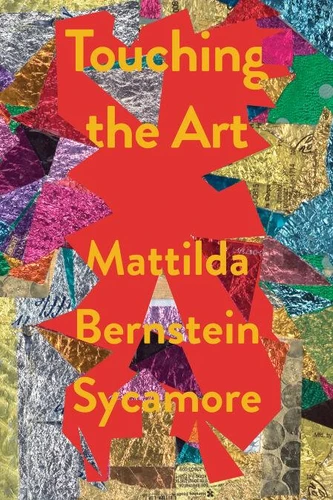
Touching the Art
Par :Formats :
Disponible dans votre compte client Decitre ou Furet du Nord dès validation de votre commande. Le format ePub protégé est :
- Compatible avec une lecture sur My Vivlio (smartphone, tablette, ordinateur)
- Compatible avec une lecture sur liseuses Vivlio
- Pour les liseuses autres que Vivlio, vous devez utiliser le logiciel Adobe Digital Edition. Non compatible avec la lecture sur les liseuses Kindle, Remarkable et Sony
- Non compatible avec un achat hors France métropolitaine
 , qui est-ce ?
Notre partenaire de plateforme de lecture numérique où vous retrouverez l'ensemble de vos ebooks gratuitement
Pour en savoir plus sur nos ebooks, consultez notre aide en ligne ici
C'est si simple ! Lisez votre ebook avec l'app Vivlio sur votre tablette, mobile ou ordinateur :

- Nombre de pages304
- FormatePub
- ISBN978-1-59376-736-5
- EAN9781593767365
- Date de parution07/11/2023
- Protection num.Adobe DRM
- Taille3 Mo
- Infos supplémentairesepub
- ÉditeurSoft Skull
Résumé
Finalist for the Pacific Northwest Book Awards Finalist for the Washington State Book AwardsA daringly observant memoir about intergenerational trauma, fine art, and compartmentalization from a returning Soft Skull author and Lambda Literary Award winnerA mixture of memoir, biography, criticism, and social history, Touching the Art is queer icon and activist Mattilda Bernstein Sycamore's interrogation of the possibilities of artistic striving, the limits of the middle-class mindset, the legacy of familial abandonment, and what art can and cannot do.
Taking the form of a self-directed research project, Sycamore recounts the legacy of her fraught relationship with her late grandmother, an abstract artist from Baltimore who encouraged Mattilda as a young artist, then disparaged Mattilda's work as "vulgar" and a "waste of talent" once it became unapologetically queer. As she sorts through her grandmother Gladys's paintings and handmade paperworks, Sycamore examines the creative impulse itself. In fragments evoking the movements of memory, she searches for Gladys's place within the trajectories of midcentury modernism and Abstract Expressionism, Jewish assimilation and white flight, intergenerational trauma and class striving.
Sycamore writes, "Art is never just art, it is a history of feeling, a gap between sensations, a safety valve, an escape hatch, a sudden shift in the body, a clipboard full of flowers, a welcome mat flipped over and back, over and back, welcome."Refusing easy answers in search of an embodied truth, Sycamore upends propriety to touch the art and feel everything that comes through.
Taking the form of a self-directed research project, Sycamore recounts the legacy of her fraught relationship with her late grandmother, an abstract artist from Baltimore who encouraged Mattilda as a young artist, then disparaged Mattilda's work as "vulgar" and a "waste of talent" once it became unapologetically queer. As she sorts through her grandmother Gladys's paintings and handmade paperworks, Sycamore examines the creative impulse itself. In fragments evoking the movements of memory, she searches for Gladys's place within the trajectories of midcentury modernism and Abstract Expressionism, Jewish assimilation and white flight, intergenerational trauma and class striving.
Sycamore writes, "Art is never just art, it is a history of feeling, a gap between sensations, a safety valve, an escape hatch, a sudden shift in the body, a clipboard full of flowers, a welcome mat flipped over and back, over and back, welcome."Refusing easy answers in search of an embodied truth, Sycamore upends propriety to touch the art and feel everything that comes through.