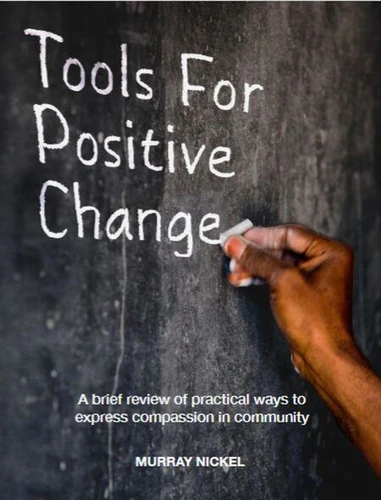
Tools for Positive Change: A brief review of positive ways to express compassion in community
Par :Formats :
Disponible dans votre compte client Decitre ou Furet du Nord dès validation de votre commande. Le format ePub est :
- Compatible avec une lecture sur My Vivlio (smartphone, tablette, ordinateur)
- Compatible avec une lecture sur liseuses Vivlio
- Pour les liseuses autres que Vivlio, vous devez utiliser le logiciel Adobe Digital Edition. Non compatible avec la lecture sur les liseuses Kindle, Remarkable et Sony
 , qui est-ce ?
Notre partenaire de plateforme de lecture numérique où vous retrouverez l'ensemble de vos ebooks gratuitement
Pour en savoir plus sur nos ebooks, consultez notre aide en ligne ici
C'est si simple ! Lisez votre ebook avec l'app Vivlio sur votre tablette, mobile ou ordinateur :

- FormatePub
- ISBN978-0-9920209-5-8
- EAN9780992020958
- Date de parution02/01/2026
- Protection num.pas de protection
- Infos supplémentairesepub
- ÉditeurMurray Nickel
Résumé
While you may care deeply for those in need, navigating the complexities of making a meaningful positive change in the lives of impoverished individuals can be challenging. Are there proven strategies that actually work? "Tools for Positive Change: A Brief Review of Practical Ways to Express Compassion in Community" is a concise, 67-page book that explores practical methods and strategies for addressing poverty and fostering positive change in communities.
Drawing on personal experiences in marginalized communities around the world, the author highlights the importance of flexible, context-sensitive tools for tackling poverty. The central portion of the book focuses on practical methodologies for community development, including needs analysis, appreciative inquiry, results-based management, participatory rural appraisal, and asset-based community development.
These approaches emphasize identifying community needs, leveraging local assets, and fostering collaboration to create sustainable solutions. The book then turns to the importance of building effective partnerships. It underscores the need for shared goals, open information exchange, and clear boundaries to ensure accountability and address potential conflicts. Finally, the author shares insights and experiences from community leaders and trainers in the Democratic Republic of Congo.
The book also incorporates visual aids-such as graphs and diagrams-to clarify concepts like project success, needs analysis, and partnership dynamics. Overall, it offers practical advice and strategies for those who want to express compassion in tangible ways and make a lasting, positive impact in their communities.
Drawing on personal experiences in marginalized communities around the world, the author highlights the importance of flexible, context-sensitive tools for tackling poverty. The central portion of the book focuses on practical methodologies for community development, including needs analysis, appreciative inquiry, results-based management, participatory rural appraisal, and asset-based community development.
These approaches emphasize identifying community needs, leveraging local assets, and fostering collaboration to create sustainable solutions. The book then turns to the importance of building effective partnerships. It underscores the need for shared goals, open information exchange, and clear boundaries to ensure accountability and address potential conflicts. Finally, the author shares insights and experiences from community leaders and trainers in the Democratic Republic of Congo.
The book also incorporates visual aids-such as graphs and diagrams-to clarify concepts like project success, needs analysis, and partnership dynamics. Overall, it offers practical advice and strategies for those who want to express compassion in tangible ways and make a lasting, positive impact in their communities.