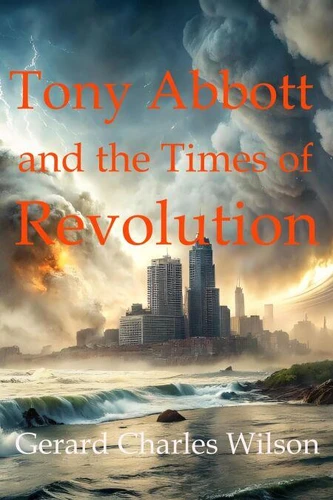
2021 REVISED EDITIONAUSTRALIAN POLITICAL HISTORY. The author intertwines three themes: the character of former Prime Minister Tony Abbott as displayed in his fearless no-holds battle with the far-left radicals at Sydney University (1976-1980); what it means to be a philosophical conservative in a leftist world; and the author's critique of the student rebellion and the radicalism driving it. The author lived through the tumultuous years of the 1960s and 1970s revolution.
Tony Abbott becomes a vehicle through which he expresses his scathing critique of the student rebellion. In 2012, a passage in David Marr's book POLITICAL ANIMAL: THE MAKING OF TONY ABBOTT caused uproar across Australia. Leftist Marr is an out-and-proud passionate critic of Abbott's. Barbara Ramjan, wife of a top-gun criminal lawyer and hitherto unknown to the public, accused Abbott of subjecting her to an act of violence that (allegedly) occurred in 1977 when they were students at Sydney University.
Marr made Ramjan's accusation public thirty-five years later. Abbott's many critics in politics and the media swallowed the accusation and treated the alleged violence as more evidence for the views they had long held about him. The scenario they propagate is that Abbott is sexist and hates women; claims men are the natural leaders of society; and in politics he is brutal and insensitive. Above all this, is the irrational discriminatory religion that motivates him.
Abbott has no place in politics. Indeed, feminist Susan Mitchell strove to make the case in her book TONY ABBOTT; A MAN'S MAN that Abbott was 'dangerous'. But how well do the many books and reports attacking Abbott stand up to scrutiny? How well does their judgment of Abbott bear close investigation? How much is a caricature for political purposes, and how much is supported by the evidence? What is the evidence for Ramjan's accusation?In TONY ABBOTT AND THE TIMES OF REVOLUTION, the author investigates.
He traces Abbott's political development from school through to the end of his time at Sydney University (1963-1980). A contemporary of Abbott's and sharing a similar background, the author draws on his experiences and reactions to the tumultuous times of the 1960s and 1970s in addition to the documentary research. The book is in four parts: the school years and the 1960s revolution; student radicalism at Sydney University 1973-1975, the prelude to Abbott's arrival on campus; Abbott's engagement with the far left (1976-1980); and the media and Abbott.
What emerges from the author's tracing of Abbott's combat with the far left on campus is the waging of a heroic battle on behalf of Western Civilisation against the combined forces of Marxism in its multiple manifestations. In the final chapter, the author reviews the evidence in Marr's book for the alleged violence and finds none of it makes sense. There are holes through which a herd of African elephants could pass without touching the sides.
The book contains an index of names.
2021 REVISED EDITIONAUSTRALIAN POLITICAL HISTORY. The author intertwines three themes: the character of former Prime Minister Tony Abbott as displayed in his fearless no-holds battle with the far-left radicals at Sydney University (1976-1980); what it means to be a philosophical conservative in a leftist world; and the author's critique of the student rebellion and the radicalism driving it. The author lived through the tumultuous years of the 1960s and 1970s revolution.
Tony Abbott becomes a vehicle through which he expresses his scathing critique of the student rebellion. In 2012, a passage in David Marr's book POLITICAL ANIMAL: THE MAKING OF TONY ABBOTT caused uproar across Australia. Leftist Marr is an out-and-proud passionate critic of Abbott's. Barbara Ramjan, wife of a top-gun criminal lawyer and hitherto unknown to the public, accused Abbott of subjecting her to an act of violence that (allegedly) occurred in 1977 when they were students at Sydney University.
Marr made Ramjan's accusation public thirty-five years later. Abbott's many critics in politics and the media swallowed the accusation and treated the alleged violence as more evidence for the views they had long held about him. The scenario they propagate is that Abbott is sexist and hates women; claims men are the natural leaders of society; and in politics he is brutal and insensitive. Above all this, is the irrational discriminatory religion that motivates him.
Abbott has no place in politics. Indeed, feminist Susan Mitchell strove to make the case in her book TONY ABBOTT; A MAN'S MAN that Abbott was 'dangerous'. But how well do the many books and reports attacking Abbott stand up to scrutiny? How well does their judgment of Abbott bear close investigation? How much is a caricature for political purposes, and how much is supported by the evidence? What is the evidence for Ramjan's accusation?In TONY ABBOTT AND THE TIMES OF REVOLUTION, the author investigates.
He traces Abbott's political development from school through to the end of his time at Sydney University (1963-1980). A contemporary of Abbott's and sharing a similar background, the author draws on his experiences and reactions to the tumultuous times of the 1960s and 1970s in addition to the documentary research. The book is in four parts: the school years and the 1960s revolution; student radicalism at Sydney University 1973-1975, the prelude to Abbott's arrival on campus; Abbott's engagement with the far left (1976-1980); and the media and Abbott.
What emerges from the author's tracing of Abbott's combat with the far left on campus is the waging of a heroic battle on behalf of Western Civilisation against the combined forces of Marxism in its multiple manifestations. In the final chapter, the author reviews the evidence in Marr's book for the alleged violence and finds none of it makes sense. There are holes through which a herd of African elephants could pass without touching the sides.
The book contains an index of names.

 , qui est-ce ?