SOLDES
Jusqu'à -70% sur une sélection d'articles*

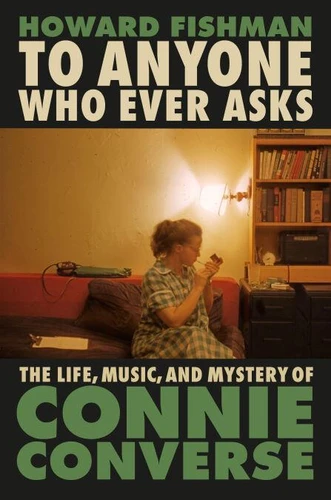
To Anyone Who Ever Asks. The Life, Music, and Mystery of Connie Converse
Par :Formats :
Disponible dans votre compte client Decitre ou Furet du Nord dès validation de votre commande. Le format ePub protégé est :
- Compatible avec une lecture sur My Vivlio (smartphone, tablette, ordinateur)
- Compatible avec une lecture sur liseuses Vivlio
- Pour les liseuses autres que Vivlio, vous devez utiliser le logiciel Adobe Digital Edition. Non compatible avec la lecture sur les liseuses Kindle, Remarkable et Sony
- Non compatible avec un achat hors France métropolitaine
 , qui est-ce ?
Notre partenaire de plateforme de lecture numérique où vous retrouverez l'ensemble de vos ebooks gratuitement
Pour en savoir plus sur nos ebooks, consultez notre aide en ligne ici
C'est si simple ! Lisez votre ebook avec l'app Vivlio sur votre tablette, mobile ou ordinateur :

- Nombre de pages560
- FormatePub
- ISBN978-0-593-18738-8
- EAN9780593187388
- Date de parution02/05/2023
- Protection num.Adobe DRM
- Taille26 Mo
- Infos supplémentairesepub
- ÉditeurDutton
Résumé
Shortlisted for the Plutarch Award for best biographyThe mysterious true story of Connie Converse-a mid-century New York City songwriter, singer, and composer whose haunting music never found broad recognition-and one writer's quest to understand her lifeThis is the mesmerizing story of an enigmatic life. When musician and New Yorker contributor Howard Fishman first heard Connie Converse's voice on a recording, he was convinced she could not be real.
Her recordings were too good not to know, and too out of place for the 1950s to make sense-a singer who seemed to bridge the gap between traditional Americana (country, blues, folk, jazz, and gospel), the Great American Songbook, and the singer-songwriter movement that exploded a decade later with Bob Dylan and Joni Mitchell. And then there was the bizarre legend about Connie Converse that had become the prevailing narrative of her life: that in 1974, at the age of fifty, she simply drove off one day and was never heard from again.
Could this have been true? Who was Connie Converse, really? Supported by a dozen years of research, travel to everywhere she lived, and hundreds of extensive interviews, Fishman approaches Converse's story as both a fan and a journalist, and expertly weaves a narrative of her life and music, and of how it has come to speak to him as both an artist and a person. Ultimately, he places her in the canon as a significant outsider artist, a missing link between a now old-fashioned kind of American music and the reflective, complex, arresting music that transformed the 1960s and music forever. But this is also a story of deeply secretive New England traditions, of a woman who fiercely strove for independence and success when the odds were against her; a story that includes suicide, mental illness, statistics, siblings, oil paintings, acoustic guitars, cross-country road trips, 1950s Greenwich Village, an America marching into the Cold War, questions about sexuality, and visionary, forward thinking about race, class, and conflict.
It's a story and subject that is by turn hopeful, inspiring, melancholy, and chilling.
Her recordings were too good not to know, and too out of place for the 1950s to make sense-a singer who seemed to bridge the gap between traditional Americana (country, blues, folk, jazz, and gospel), the Great American Songbook, and the singer-songwriter movement that exploded a decade later with Bob Dylan and Joni Mitchell. And then there was the bizarre legend about Connie Converse that had become the prevailing narrative of her life: that in 1974, at the age of fifty, she simply drove off one day and was never heard from again.
Could this have been true? Who was Connie Converse, really? Supported by a dozen years of research, travel to everywhere she lived, and hundreds of extensive interviews, Fishman approaches Converse's story as both a fan and a journalist, and expertly weaves a narrative of her life and music, and of how it has come to speak to him as both an artist and a person. Ultimately, he places her in the canon as a significant outsider artist, a missing link between a now old-fashioned kind of American music and the reflective, complex, arresting music that transformed the 1960s and music forever. But this is also a story of deeply secretive New England traditions, of a woman who fiercely strove for independence and success when the odds were against her; a story that includes suicide, mental illness, statistics, siblings, oil paintings, acoustic guitars, cross-country road trips, 1950s Greenwich Village, an America marching into the Cold War, questions about sexuality, and visionary, forward thinking about race, class, and conflict.
It's a story and subject that is by turn hopeful, inspiring, melancholy, and chilling.