SOLDES
Jusqu'à -70% sur une sélection d'articles*

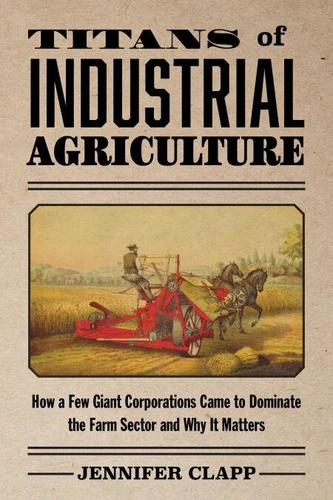
Titans of Industrial Agriculture. How a Few Giant Corporations Came to Dominate the Farm Sector and Why It Matters
Par :Formats :
Disponible dans votre compte client Decitre ou Furet du Nord dès validation de votre commande. Le format ePub protégé est :
- Compatible avec une lecture sur My Vivlio (smartphone, tablette, ordinateur)
- Compatible avec une lecture sur liseuses Vivlio
- Pour les liseuses autres que Vivlio, vous devez utiliser le logiciel Adobe Digital Edition. Non compatible avec la lecture sur les liseuses Kindle, Remarkable et Sony
- Non compatible avec un achat hors France métropolitaine
 , qui est-ce ?
Notre partenaire de plateforme de lecture numérique où vous retrouverez l'ensemble de vos ebooks gratuitement
Pour en savoir plus sur nos ebooks, consultez notre aide en ligne ici
C'est si simple ! Lisez votre ebook avec l'app Vivlio sur votre tablette, mobile ou ordinateur :

- Nombre de pages474
- FormatePub
- ISBN978-0-262-38234-2
- EAN9780262382342
- Date de parution18/02/2025
- Protection num.Adobe DRM
- Taille6 Mo
- Infos supplémentairesepub
- ÉditeurThe MIT Press
Résumé
How a small handful of giant transnational corporations has come to dominate the farm inputs sector, why it matters, and what can be done about it. Every year, hundreds of billions of dollars' worth of farm machinery, fertilizer, seeds, and pesticides are sold to farmers around the world. Although agricultural inputs are a huge sector of the global economy, the lion's share of that market is controlled by a relatively small number of very large transnational corporations.
The high degree of concentration among these agribusiness titans is striking, considering that just a few hundred years ago agricultural inputs were not even marketed goods. In Titans of Industrial Agriculture, Jennifer Clapp explains how we got from there to here, outlining the forces that enabled this extreme concentration of power and the entrenchment of industrial agriculture. Clapp reveals that the firms that rose to the top of these sectors benefited from distinct market, technology, and policy advantages dating back a century or more that enabled them to expand their businesses through mergers and acquisitions that made them even bigger and more powerful.
These dynamics matter because the firms at the top have long shaped industrial farming practices that, in turn, have generated enormous social, ecological, and health impacts on the planet and the future of food systems. Beyond analyzing how these problems have arisen and manifested, the book examines recent efforts to address corporate power and dominance in food systems and assesses the prospects for change.
Among the first works to examine deep roots of corporate power in agriculture, Titans of Industrial Agriculture helps illuminate just how corporate actors have encouraged the "lock-in" of industrial agriculture, despite all its known social and ecological costs.
The high degree of concentration among these agribusiness titans is striking, considering that just a few hundred years ago agricultural inputs were not even marketed goods. In Titans of Industrial Agriculture, Jennifer Clapp explains how we got from there to here, outlining the forces that enabled this extreme concentration of power and the entrenchment of industrial agriculture. Clapp reveals that the firms that rose to the top of these sectors benefited from distinct market, technology, and policy advantages dating back a century or more that enabled them to expand their businesses through mergers and acquisitions that made them even bigger and more powerful.
These dynamics matter because the firms at the top have long shaped industrial farming practices that, in turn, have generated enormous social, ecological, and health impacts on the planet and the future of food systems. Beyond analyzing how these problems have arisen and manifested, the book examines recent efforts to address corporate power and dominance in food systems and assesses the prospects for change.
Among the first works to examine deep roots of corporate power in agriculture, Titans of Industrial Agriculture helps illuminate just how corporate actors have encouraged the "lock-in" of industrial agriculture, despite all its known social and ecological costs.