SOLDES
Jusqu'à -70% sur une sélection d'articles*

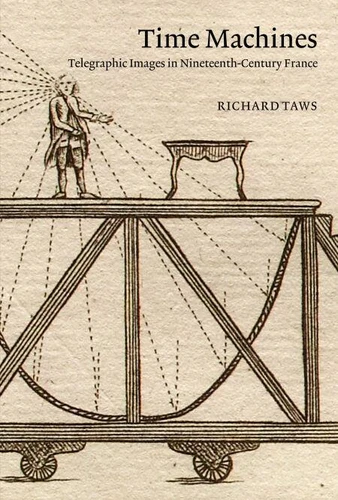
Time Machines. Telegraphic Images in Nineteenth-Century France
Par :Formats :
Disponible dans votre compte client Decitre ou Furet du Nord dès validation de votre commande. Le format ePub protégé est :
- Compatible avec une lecture sur My Vivlio (smartphone, tablette, ordinateur)
- Compatible avec une lecture sur liseuses Vivlio
- Pour les liseuses autres que Vivlio, vous devez utiliser le logiciel Adobe Digital Edition. Non compatible avec la lecture sur les liseuses Kindle, Remarkable et Sony
- Non compatible avec un achat hors France métropolitaine
 , qui est-ce ?
Notre partenaire de plateforme de lecture numérique où vous retrouverez l'ensemble de vos ebooks gratuitement
Pour en savoir plus sur nos ebooks, consultez notre aide en ligne ici
C'est si simple ! Lisez votre ebook avec l'app Vivlio sur votre tablette, mobile ou ordinateur :

- Nombre de pages400
- FormatePub
- ISBN978-0-262-37969-4
- EAN9780262379694
- Date de parution21/01/2025
- Protection num.Adobe DRM
- Taille7 Mo
- Infos supplémentairesepub
- ÉditeurThe MIT Press
Résumé
A riveting exploration of the relationship between art and telegraphy, and its implications for understanding time and history in nineteenth-century France. In Time Machines Richard Taws examines the relationship between art and telegraphy in the decades following the French Revolution. The optical telegraph was a novel form of visual communication developed in the 1790s that remained in use until the mid-1850s.
This pre-electric telegraph, based on a semaphore code, irrevocably changed the media landscape of nineteenth-century France. Although now largely forgotten, in its day it covered vast distances and changed the way people thought about time. It also shaped, and was shaped by, a proliferating world of images. What happens, Taws asks, if we think about art telegraphically?Placed on prominent buildings across France-for several years there was one on top of the Louvre-the telegraph's waving limbs were a ubiquitous sight, shifting how public space was experienced and represented.
The system was depicted by a wide range of artists, who were variously amused, appalled, irritated, or seduced by the telegraph's intractable coded messages and the uncanny environmental and perceptual disruption it caused. Clouds, architecture, landscapes, and gestures: all signified differently in the era of telegraphy, and the telegraph became a powerful means to comprehend France's technological and political past.
While Paris's famous arcades began to crisscross the city at ground level, a more enigmatic network was operating above. Shifting attention from the streets to the skies, this book shows how modern France took shape quite literally under the telegraph's sign.
This pre-electric telegraph, based on a semaphore code, irrevocably changed the media landscape of nineteenth-century France. Although now largely forgotten, in its day it covered vast distances and changed the way people thought about time. It also shaped, and was shaped by, a proliferating world of images. What happens, Taws asks, if we think about art telegraphically?Placed on prominent buildings across France-for several years there was one on top of the Louvre-the telegraph's waving limbs were a ubiquitous sight, shifting how public space was experienced and represented.
The system was depicted by a wide range of artists, who were variously amused, appalled, irritated, or seduced by the telegraph's intractable coded messages and the uncanny environmental and perceptual disruption it caused. Clouds, architecture, landscapes, and gestures: all signified differently in the era of telegraphy, and the telegraph became a powerful means to comprehend France's technological and political past.
While Paris's famous arcades began to crisscross the city at ground level, a more enigmatic network was operating above. Shifting attention from the streets to the skies, this book shows how modern France took shape quite literally under the telegraph's sign.