
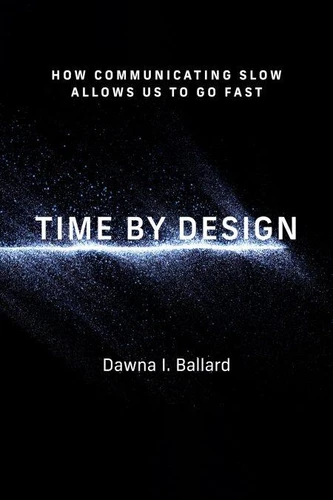
Time by Design /anglais
Par :Formats :
Disponible dans votre compte client Decitre ou Furet du Nord dès validation de votre commande. Le format ePub protégé est :
- Compatible avec une lecture sur My Vivlio (smartphone, tablette, ordinateur)
- Compatible avec une lecture sur liseuses Vivlio
- Pour les liseuses autres que Vivlio, vous devez utiliser le logiciel Adobe Digital Edition. Non compatible avec la lecture sur les liseuses Kindle, Remarkable et Sony
- Non compatible avec un achat hors France métropolitaine
 , qui est-ce ?
Notre partenaire de plateforme de lecture numérique où vous retrouverez l'ensemble de vos ebooks gratuitement
Pour en savoir plus sur nos ebooks, consultez notre aide en ligne ici
C'est si simple ! Lisez votre ebook avec l'app Vivlio sur votre tablette, mobile ou ordinateur :

- Nombre de pages234
- FormatePub
- ISBN978-0-262-38355-4
- EAN9780262383554
- Date de parution16/12/2025
- Protection num.Adobe DRM
- Taille19 Mo
- Infos supplémentairesepub
- ÉditeurThe MIT Press
Résumé
How effective individuals, teams, and organizations routinely communicate slow to go fast, and how time as a feature of human experience can actually be designed. Speed in collective action, like teamwork or organizing, is never simply a time-based issue. While conventional theory relies on time-based interventions to achieve speed, this approach typically fails. In Time by Design, Dawna Ballard shows how speed is actually a function of the relationship between time and communication, or chronemics.
Ballard identifies two communication design logics-fast and slow-that reflect contrasting beliefs about how communication works to support urgent, time-sensitive work demands. Fast communication design logics are linear, short term in orientation, and treat time in interaction as transactional. Slow communication design logics are nonlinear and long term in orientation and treat time in interaction as transcendent.
Given these distinct approaches, the book offers a practical toolkit that shows the reader how the two chronemic designs can be used in complementary fashion-and how effective teams, communities, and organizations routinely communicate slow to go fast.
Ballard identifies two communication design logics-fast and slow-that reflect contrasting beliefs about how communication works to support urgent, time-sensitive work demands. Fast communication design logics are linear, short term in orientation, and treat time in interaction as transactional. Slow communication design logics are nonlinear and long term in orientation and treat time in interaction as transcendent.
Given these distinct approaches, the book offers a practical toolkit that shows the reader how the two chronemic designs can be used in complementary fashion-and how effective teams, communities, and organizations routinely communicate slow to go fast.