SOLDES
Jusqu'à -70% sur une sélection d'articles*

Nouveauté
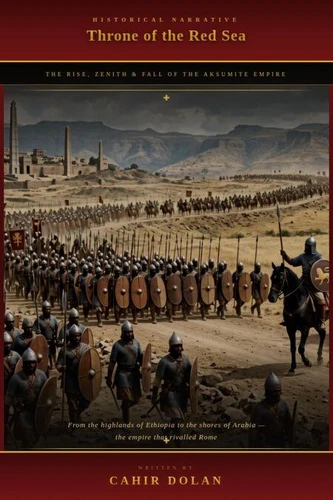
Throne of the Red Sea: The Rise, Zenith, and Fall of the Aksumite Empire
Par :Formats :
Disponible dans votre compte client Decitre ou Furet du Nord dès validation de votre commande. Le format ePub est :
- Compatible avec une lecture sur My Vivlio (smartphone, tablette, ordinateur)
- Compatible avec une lecture sur liseuses Vivlio
- Pour les liseuses autres que Vivlio, vous devez utiliser le logiciel Adobe Digital Edition. Non compatible avec la lecture sur les liseuses Kindle, Remarkable et Sony
 , qui est-ce ?
Notre partenaire de plateforme de lecture numérique où vous retrouverez l'ensemble de vos ebooks gratuitement
Pour en savoir plus sur nos ebooks, consultez notre aide en ligne ici
C'est si simple ! Lisez votre ebook avec l'app Vivlio sur votre tablette, mobile ou ordinateur :

- FormatePub
- ISBN8235288010
- EAN9798235288010
- Date de parution16/06/2026
- Protection num.pas de protection
- Infos supplémentairesepub
- ÉditeurIoakim Ioakim
Résumé
Throne of the Red Sea: The Rise, Zenith, and Fall of the Aksumite Empire For more than a thousand years, the Kingdom of Aksum was one of the most powerful civilisations on earth. From its heartland on the volcanic plateau of modern Ethiopia and Eritrea, this extraordinary highland empire controlled the western shore of the Red Sea, commanded the trade routes connecting Rome to India, minted gold coins that circulated across three continents, and produced the monolithic granite obelisks that remain among the largest single stones ever raised by human hands.
When the Persian prophet Mani catalogued the four great empires of the third century CE, he named Rome, Persia, China, and Aksum. This book traces the full arc of Aksumite civilisation across a thousand years: the origins of the state in the collapse of the earlier kingdom of D'mt, the conversion to Christianity under King Ezana, the Arabian campaigns of King Kaleb, the role of the Aksumite court in sheltering the earliest followers of the Prophet Muhammad, and the long, compounding catastrophe, commercial isolation, ecological collapse, plague, and the devastating invasion of Queen Gudit, that ended the empire's political life while leaving its cultural inheritance intact.
From the Ge'ez language still chanted in Ethiopian churches to the Ark of the Covenant maintained at Axum to this day, the Aksumite legacy has never died. This is its story, told in full, for the first time, in a single narrative history.
When the Persian prophet Mani catalogued the four great empires of the third century CE, he named Rome, Persia, China, and Aksum. This book traces the full arc of Aksumite civilisation across a thousand years: the origins of the state in the collapse of the earlier kingdom of D'mt, the conversion to Christianity under King Ezana, the Arabian campaigns of King Kaleb, the role of the Aksumite court in sheltering the earliest followers of the Prophet Muhammad, and the long, compounding catastrophe, commercial isolation, ecological collapse, plague, and the devastating invasion of Queen Gudit, that ended the empire's political life while leaving its cultural inheritance intact.
From the Ge'ez language still chanted in Ethiopian churches to the Ark of the Covenant maintained at Axum to this day, the Aksumite legacy has never died. This is its story, told in full, for the first time, in a single narrative history.