SOLDES
Jusqu'à -70% sur une sélection d'articles*

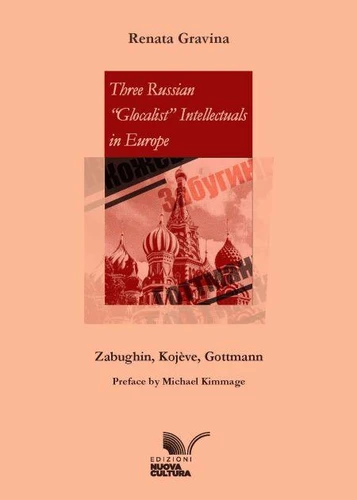
Three Russian "Glocalist" Intellectuals in Europe. Zabughin, Kojève, Gottmann
Par :Formats :
Disponible dans votre compte client Decitre ou Furet du Nord dès validation de votre commande. Le format ePub est :
- Compatible avec une lecture sur My Vivlio (smartphone, tablette, ordinateur)
- Compatible avec une lecture sur liseuses Vivlio
- Pour les liseuses autres que Vivlio, vous devez utiliser le logiciel Adobe Digital Edition. Non compatible avec la lecture sur les liseuses Kindle, Remarkable et Sony
 , qui est-ce ?
Notre partenaire de plateforme de lecture numérique où vous retrouverez l'ensemble de vos ebooks gratuitement
Pour en savoir plus sur nos ebooks, consultez notre aide en ligne ici
C'est si simple ! Lisez votre ebook avec l'app Vivlio sur votre tablette, mobile ou ordinateur :

- Nombre de pages112
- FormatePub
- ISBN978-88-3365-817-9
- EAN9788833658179
- Date de parution23/09/2025
- Protection num.Digital Watermarking
- Taille1008 Ko
- Infos supplémentairesepub
- ÉditeurEdizioni Nuova Cultura
Résumé
The book is intended for scholars and Eastern Europe lovers. The general purpose of the collection is to examine the relevant connections between three different Russian intellectuals border thinkers active in the European political life during the first part of the last century: Vladimir Zabughin, Aleksandr Kojève and Jean Gottmann from a Glocalist methodological perspective. The philologist Zabughin, the philosopher Kojève and the geographer Gottmann are representatives of an imperial Russian intellectualism who escaped from the motherland.
They had all the opportunity to contribute to what is called the emigr'kult (the Culture of Emigration). From 1905, and even more so from 1917, the White Russia (Belaja Rossija) represented a multifaceted phenomenon of opposition to Bolshevism outside the borders of the motherland. Their common belief was a Glocalist perspective, something corresponding to an ideal of communities within virtual ideological, economic, theological, or spiritual intra- or trans-territorial.
Glocalism interprets reality through the connection between major geopolitical scenarios and the trajectories of national or community subjects that have redrawn borders, identities, and models of power.
They had all the opportunity to contribute to what is called the emigr'kult (the Culture of Emigration). From 1905, and even more so from 1917, the White Russia (Belaja Rossija) represented a multifaceted phenomenon of opposition to Bolshevism outside the borders of the motherland. Their common belief was a Glocalist perspective, something corresponding to an ideal of communities within virtual ideological, economic, theological, or spiritual intra- or trans-territorial.
Glocalism interprets reality through the connection between major geopolitical scenarios and the trajectories of national or community subjects that have redrawn borders, identities, and models of power.