SOLDES
Jusqu'à -70% sur une sélection d'articles*

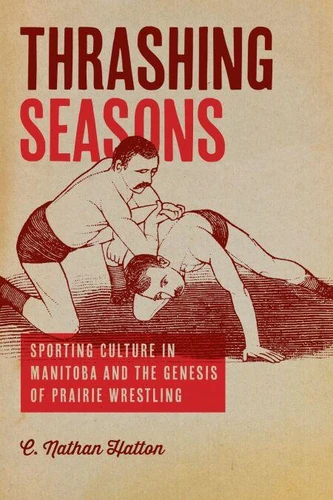
Thrashing Seasons. Sporting Culture in Manitoba and the Genesis of Prairie Wrestling
Par :Formats :
Disponible dans votre compte client Decitre ou Furet du Nord dès validation de votre commande. Le format ePub est :
- Compatible avec une lecture sur My Vivlio (smartphone, tablette, ordinateur)
- Compatible avec une lecture sur liseuses Vivlio
- Pour les liseuses autres que Vivlio, vous devez utiliser le logiciel Adobe Digital Edition. Non compatible avec la lecture sur les liseuses Kindle, Remarkable et Sony
 , qui est-ce ?
Notre partenaire de plateforme de lecture numérique où vous retrouverez l'ensemble de vos ebooks gratuitement
Pour en savoir plus sur nos ebooks, consultez notre aide en ligne ici
C'est si simple ! Lisez votre ebook avec l'app Vivlio sur votre tablette, mobile ou ordinateur :

- Nombre de pages336
- FormatePub
- ISBN978-0-88755-495-7
- EAN9780887554957
- Date de parution03/05/2016
- Protection num.Digital Watermarking
- Taille6 Mo
- Infos supplémentairesepub
- ÉditeurUniversity of Manitoba Press
Résumé
Horseback wrestling, catch-as-catch-can, glima; long before the advent of today's WWE, forms of wrestling were practised by virtually every cultural group. C. Nathan Hatton's Thrashing Seasons tells the story of wrestling in Manitoba from its earliest documented origins in the eighteenth century to the Great Depression.
Wrestling was never merely a sport: residents of Manitoba found meaning beyond the simple act of two people struggling for physical advantage on a mat, in a ring, or on a grassy field.
Frequently controversial and often divisive, wrestling was nevertheless a popular and resilient cultural practice that proved adaptable to the rapidly changing social conditions in western Canada during its early boom period. In addition to chronicling the colourful exploits of the many athletes who shaped wrestling's early years, Hatton explores wrestling as a social phenomenon intimately bound up with debates around respectability, ethnicity, race, class, and idealized conceptions of masculinity.
In doing so, Thrashing Seasons illuminates wrestling as a complex and socially significant cultural activity, one that has been virtually unexamined by Canadian historians looking at the nineteenth and early twentieth centuries.
Frequently controversial and often divisive, wrestling was nevertheless a popular and resilient cultural practice that proved adaptable to the rapidly changing social conditions in western Canada during its early boom period. In addition to chronicling the colourful exploits of the many athletes who shaped wrestling's early years, Hatton explores wrestling as a social phenomenon intimately bound up with debates around respectability, ethnicity, race, class, and idealized conceptions of masculinity.
In doing so, Thrashing Seasons illuminates wrestling as a complex and socially significant cultural activity, one that has been virtually unexamined by Canadian historians looking at the nineteenth and early twentieth centuries.